
Extreme weather costs surge as climate data shows new ‘whiplash’ pattern
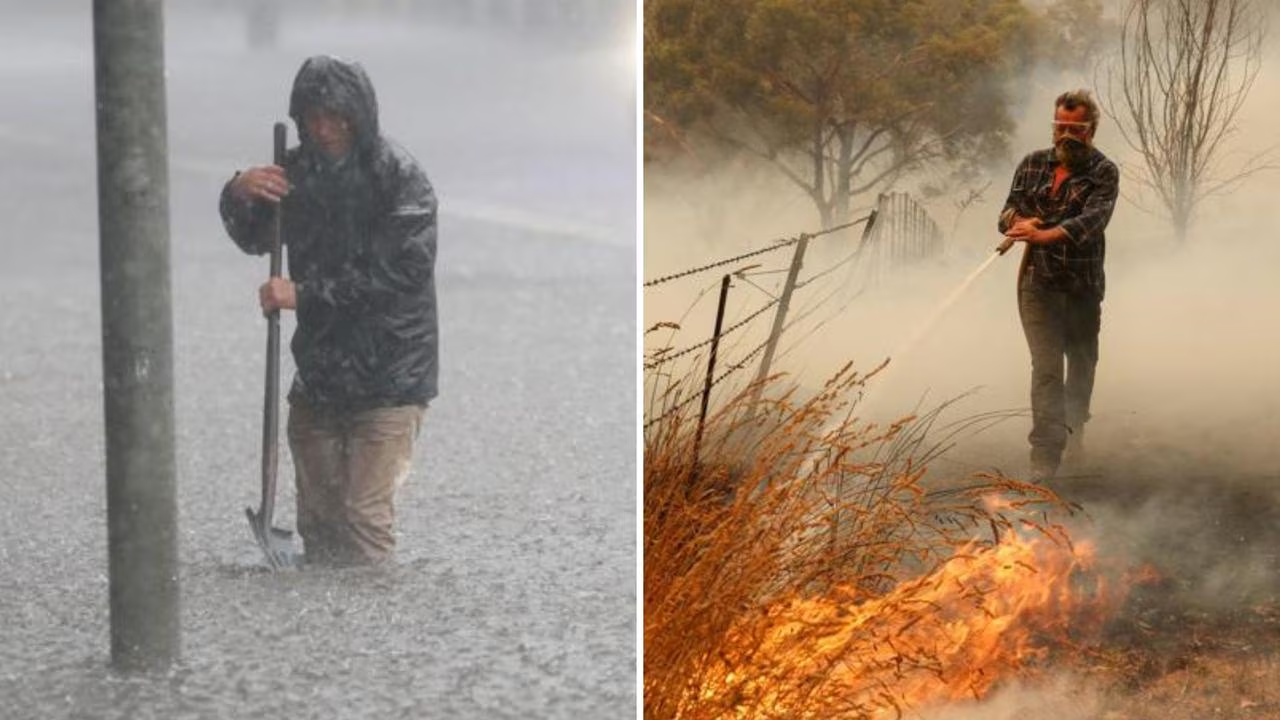
Climate “whiplash” from one extreme to another has been the hallmark of wild and dangerous weather this summer, a new report from the Climate Council states.
The whiplash effect is typified by flash flooding washing cars out to sea along Victoria’s Great Ocean Road, which was sandwiched between a period of catastrophic fire warnings and then a second bout of extreme heat.
“Climate change is now firmly behind the steering wheel of Australia’s temperatures,” Climate Council meteorologist Andrew Watkins said.
“In fact 2025 started and ended in La Niña – which usually cools large parts of Australia – yet this was our fourth hottest year, and the globe’s third hottest year, on record. That tells us the baseline has shifted.”
The hotter baseline, bringing more extreme highs, means more water evaporates up into the skies.
“With more moisture in the atmosphere, storms produce more rain,” the adjunct professor explains.
“Some towns in western Queensland recorded their average annual rainfall within the first five weeks of 2026. Then a tropical low in February resulted in flood watches across nearly half the continent.”
“Inland areas that had sweltered through a week of temperatures over 45°C in January were then cut off by floodwaters and quagmire roads a month later.”
Released on Tuesday, the report also notes insurance companies paid out on average $4.5bn per year from 2019 to 2024, more than double the average annual cost for the previous 30 years.
The Climate Council points to key whiplash instances across the country which have broadly scorched and then flooded regions in a matter of weeks.
In the second week of January, fire storms sparked dry lightning which saw more than 200 bushfires across Victoria, as the towns of Walpeup and Hopetoun set new statewide record high temperatures of 48.9C on January 27; one-third of the state set new record January maximums that day.
Some residents along the Wye River in the Otways in the state’s southwest evacuated under catastrophic fire danger warnings and a week later, record-breaking rains caused floodwaters to drag cars out to sea.
Parts of NSW’s northwest recorded their highest ever rainfall totals for February, including Tibooburra which saw 273mm for the month, 10-times the February average.
NSW also saw a record six consecutive days of 45C temperatures, recorded in January at Pooncarie and Ivanhoe.
A December heatwave caused large fires near Gosford and Newcastle, destroying some 20 homes and claiming the life of 59-year-old firefighter John Lohan.
Once-in-a-generation fires had become once-in-a-decade disasters, NSW Fire Commissioner Greg Mullins said.
“The climate baseline has shifted, and that means bigger, more dangerous, destructive fires flaring up more quickly, more often. Stronger winds mean destructive fires can happen even on cooler days, like those in Tasmania which destroyed 19 homes.”
The state fire commissioner is also on the Climate Council.
“We used to think of catastrophic fire conditions as once-in-a-generation events. Now they’re arriving every decade.
“Accelerating extremes are stretching fire services, with Victorian firefighters called on to battle 200 fires in one day, ultimately resulting in the loss of 451 homes and more than 1000 other buildings.
“We’re seeing communities hit by one disaster after the next, with little recovery time.”
Along with the immediate damage, the insurance costs were untenable too, Mr Mullins said.
“These costs will continue to balloon unless governments stop supporting coal, oil and gas pollution and speed up the shift to clean energy.”