Queensland allowed to use coal, gas for data centres despite renewable push
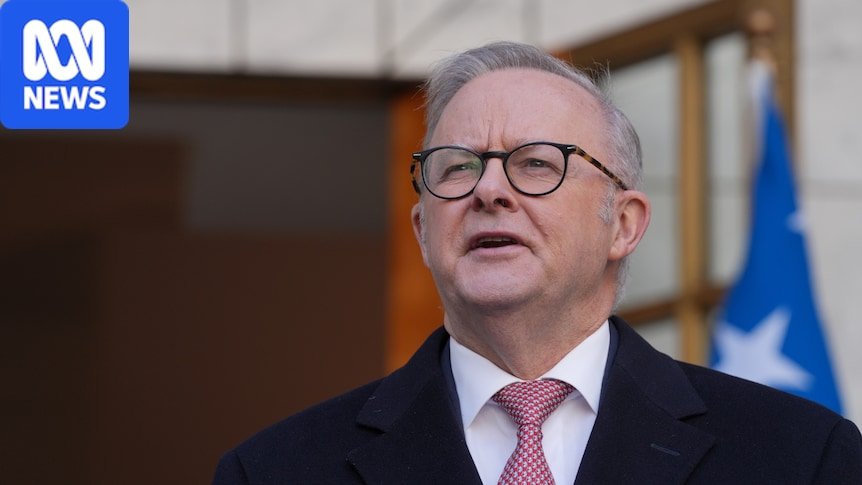
Queensland will be allowed to go its own way using gas or coal to power data centres, despite Prime Minister Anthony Albanese previously demanding states use renewables.
State and territory leaders met on Wednesday to settle national standards for data centre construction, but instead agreed to undertake further work.
Queensland Premier Crisafulli had pushed for an energy-agnostic approach and told the ABC the carve out was a “good win” for his state, which owns much of its own electricity infrastructure.
“It shows because we own our assets, both our distribution and our generation, we are able to control a different mixture of energy right across the board, and that enables us to bring on new energy opportunities,” he said.
Premiers and chief ministers met with Mr Albanese in Sydney to discuss issues including AI, domestic violence, bird flu, fuel security and the embattled national gun buyback.
Ahead of the meeting, federal Energy Minister Chris Bowen had insisted the Commonwealth would legislate over the top of states and territories that refused to adopt the renewables standard.
Queensland argued the state-owned nature of its energy infrastructure put it in a position to maintain a technology-agnostic approach, meaning gas or coal could be used to power its data centres.
The Northern Territory also opposed the renewables focus and has indicated it would use gas to power data centre projects.
Following the meeting, Mr Albanese said both jurisdictions were in a “different position” to other states, as he justified the apparent backdown on renewables.

Queensland Premier David Crisafulli had argued for a technology-neutral approach. (ABC News: Nick Dole)
South Australian Premier Peter Malinauskas rejected suggestions the prime minister had been rolled on the issue.
“What you see emerging from national cabinet is a genuine desire to make sure we work through the issues associated with a rollout of data centres in Australia in a way that has a degree of uniformity,” Mr Malinauskas told 7.30.
“And I think today’s discussion was very much an example of us all being aligned on the best way to do that.”
Mr Malinauskas said there was unity about the principle that data centres should add to the electricity grid without negatively impacting the national energy market.
“What we agreed upon is that renewables will principally be the form of energy that will power data centres in the future in Australia,” he said.
A communique released after national cabinet said the standards would “ensure consistency and clarity for investors, while protecting Australia’s economy, strengthening our sovereignty and securing benefits in line with our national interests”.
The meeting of national cabinet also agreed to make Australian citizenship a condition of holding a firearm licence. (ABC News: Nick Dole)
The prime minister said the new standards, which would also include rules on water usage and community consultation, would be legislated early next year.
“We have buy-in on Australia’s first national AI laws,” he said.
Ongoing discussions are expected to include ensuring data centres do not raise power prices for households and other businesses.
Mr Bowen has consistently argued renewables were the cheapest form of energy to ensure this did not happen.
But Mr Crisafulli has rejected this and insisted his state would be able to keep power prices low even where other energy sources were used.
“We believe that we can control our data sovereignty, protect the rights of local communities, and enable that energy mix even with those data centres on,” he said.
Citizenship a condition of holding gun licence
The meeting of national cabinet also agreed to make Australian citizenship a condition of holding a firearm licence, though the prime minister indicated there would be some exceptions.
There was little movement on a national gun buyback scheme, which the federal government tried to roll out following the Bondi terrorist attack in December last year.
Queensland had refused to take part, while others including Victoria and South Australia are yet to sign up.
Mr Albanese said the offer was “still there”, though jurisdictions were “responsible for their own decisions”.
He said the new firearm agreement would allow the sharing of Commonwealth criminal intelligence with the states and territories.
“This is about improving our laws following the horrific antisemitic attack in Bondi last year,” Mr Albanese said.
GST distribution was largely off the agenda after Mr Albanese declared on Tuesday he would not meddle with Western Australia’s portion of the carve-up while he was prime minister, despite opposition from other jurisdictions.
Cabinet also heard a report from Australia’s head vet as the federal government prepares to tip an additional $125 million to protect the nation from bird flu, which has now been detected in all six states.