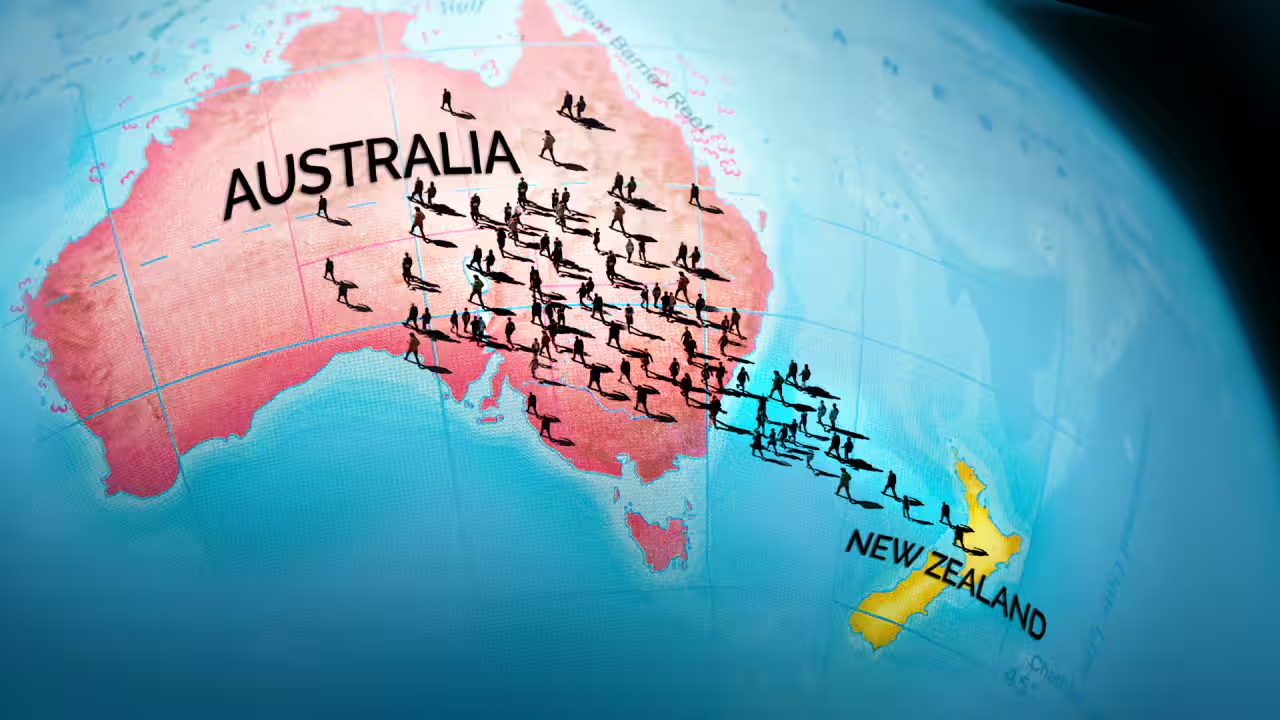
These Kiwis were driven to Australia by rising costs. Could an election bring them home?
Despite working fewer hours and earning less, the Ririnui family has more money left over each week on the Gold Coast than they did in Auckland.
Tajai Ririnui, 31, her husband, and three daughters moved from New Zealand just three months ago after struggling to make ends meet amid a cost of living crisis that showed little sign of easing.
“After rent, fuel, kindy, groceries and putting money aside for things like power, water and internet, we were left with next to nothing,” she tells SBS News.
“Don’t get me wrong, we had everything we needed, but there was no room to save, no room for extra activities with our girls and very little opportunity to actually enjoy life.”
Ririnui’s husband Jayden, 30, worked in floor restoration in New Zealand, putting in 12-hour days, sometimes six or seven days a week, to support the family. He now works as a scaffolder on the Gold Coast.
Your trusted source for staying up-to-date with the world around you. Get free daily news updates and analysis, straight to your inbox.
“We’re averaging below what we were getting in New Zealand, but we have more left over, which is ironic because we’re working less,” Tajai says.
The pull home is very strong, but honestly, you’d rather … have everything and that little bit more here than be broke and have nothing at home.

The Ririnui’s are not alone.
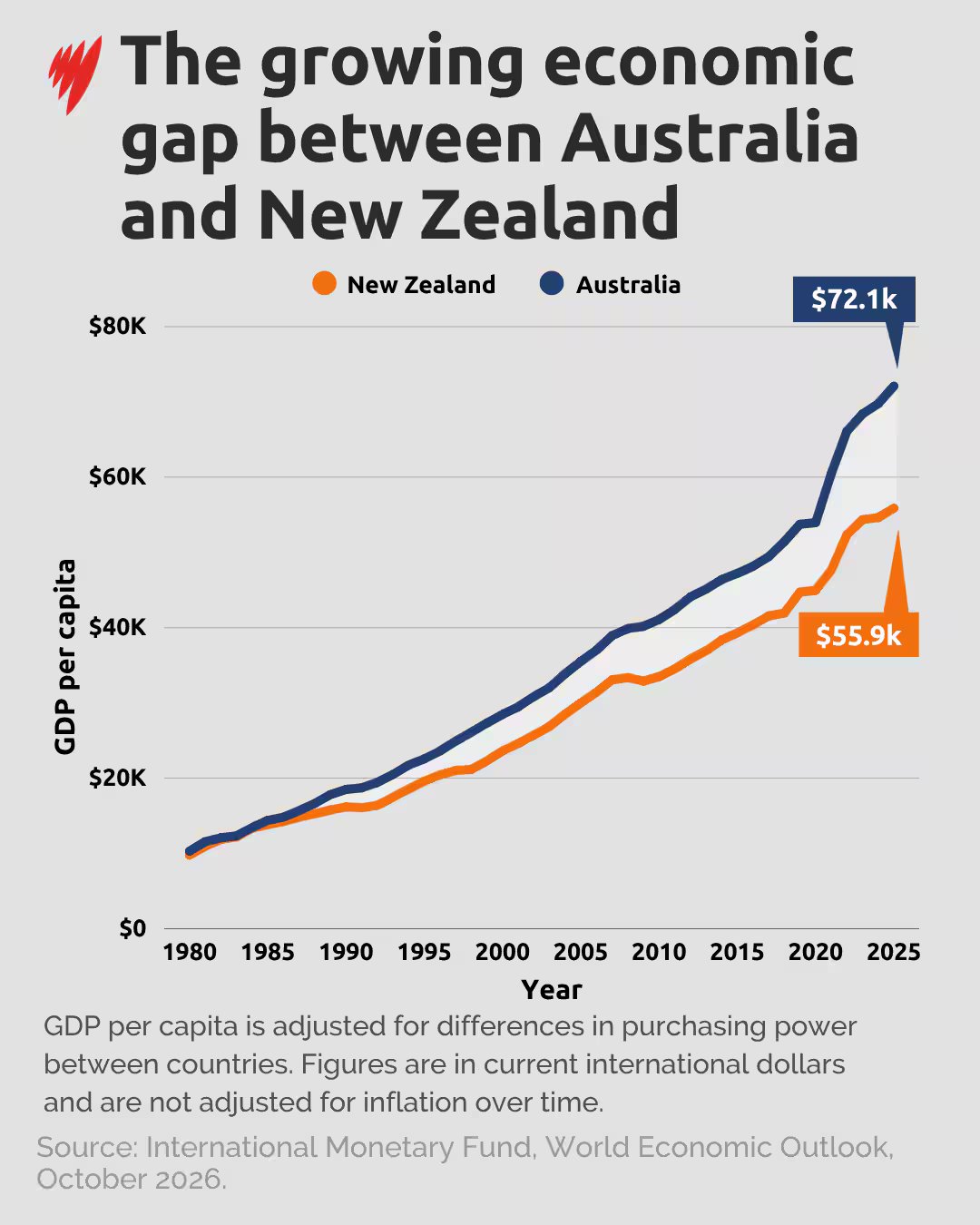
Australia’s higher wages and broader employment opportunities have long drawn New Zealanders across the Tasman, where they can live and work indefinitely under the Trans-Tasman Travel Arrangement. The movement has continued even as the economic gap between the two countries has fluctuated over time.
In the year to March 2026, an estimated 47,900 New Zealanders moved to Australia, while about 19,900 New Zealanders moved in the opposite direction. This was up 14 per cent on the previous year, leaving a net migration loss of 287,5900 people, according to Stats NZ.
But beyond the headline migration figures, new research suggests more young New Zealanders are leaving for Australia and elsewhere overseas for the long term, raising concerns about the country’s economic future.
As New Zealanders prepare to vote in Saturday’s general election, the question is whether the next government can turn the tide and convince more of them to stay.
Why Kiwis are leaving
Former New Zealand prime minister Jacinda Ardern renewed attention on the country’s emigration debate when she settled on Sydney’s Northern Beaches earlier this year.
She joined the nearly 620,000 New Zealand-born people already living in Australia as of 2024 — representing about one in eight Kiwis.
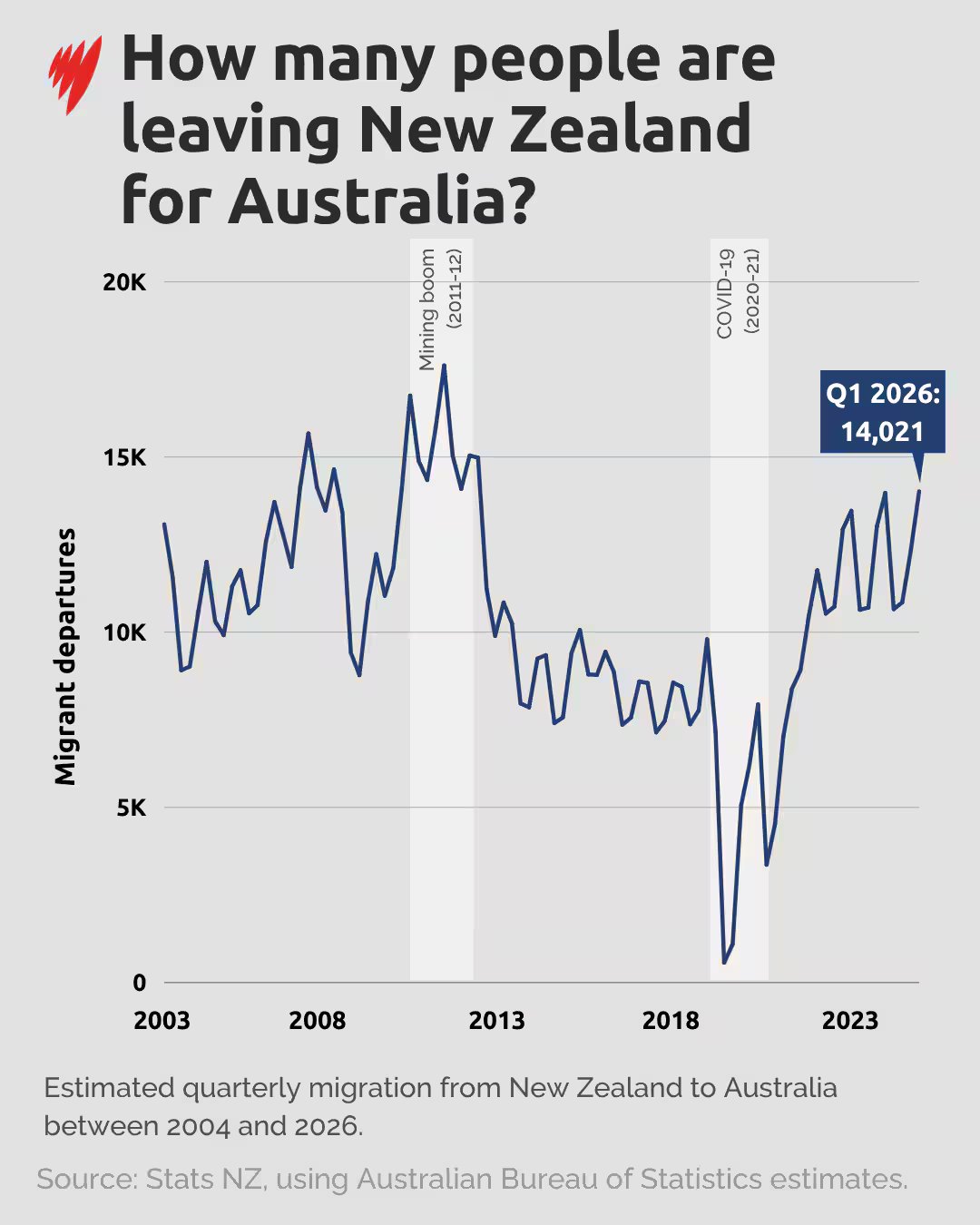
The number of arrivals ebbs and flows depending on how each country’s economy is performing. But a new report suggests more young people are making the move with little intention of returning.
About 77,500 New Zealanders aged 18 to 30 left the country long term for Australia and elsewhere between 2023 and 2025 — 60 per cent above the pre-pandemic average — according to Victor Consulting research commissioned by New Zealand’s Green Party.
Of those who left, more than four in 10 are not expected to return, according to the research, potentially resulting in the permanent loss of NZ$12 billion ($9.7 billion) in education and healthcare investment.
Paul Spoonley, a New Zealand sociologist and emeritus professor at Massey University, says young New Zealanders have traditionally left in two groups: school leavers and graduates in their mid-20s.
He links the recent departures to graduates struggling to find work in New Zealand while Australian employers actively recruit, particularly in health and policing.
Historically, around half of New Zealanders who moved to Australia eventually returned to New Zealand, but Spoonley suspects a larger share of the current wave may stay overseas.
“What we’d normally expect is that as the economic conditions in New Zealand improve over the medium to short, long term, then the migration would ease,” he tells SBS News.
But I’m not sure that those economic conditions in New Zealand are going to be as short-term as we thought.
New Zealand has experienced a years-long economic downturn, with two recessions since 2022. Although the economy has begun to recover, unemployment remains elevated at 5.7 per cent, an 11-year high, compared with 4.7 per cent in Australia.
Last month, New Zealand finance minister Nicola Willis announced the National Party’s election commitments to encourage young Kiwis to stay or return home. These include plans to legislate for lower student loan repayments, expand a 5 per cent home deposit scheme and extend paid parental leave, if the coalition government is returned to office.
But New Zealand economist Shamubeel Eaqub is sceptical there is an easy solution to stemming the flow of people overseas, pointing to four decades of faster wage growth in Australia.

In 2009, then prime minister John Key set a target of closing the income gap with Australia by 2025 — a goal that was never met.
“Obviously, we didn’t, and so therein lies the issue. Politicians have learned from that a little bit, and they’re less gung-ho about proclaiming they’re going to somehow close the gap with Australia,” Eaqub tells SBS News.
The cost of staying
Another New Zealander planning to make the move is Lisa Robb, 47, who has lived in Katikati, a town of 6,000 people roughly two hours’ drive south-east of Auckland, with her family for 23 years.
After work dried up for her husband Manny’s plastering business, he moved to Perth in February.

In New Zealand, he often worked seven days a week. In Perth, he now earns three times as much while working Monday to Friday, Robb says.
Two of her adult children have already moved to Australia in search of better opportunities, as have her stepson and his young family.
She plans to join them after her 15-year-old son finishes school.
“You just don’t get to live a life because you’re too busy working to make the money that you need just to survive, not even thrive, just survive,” Robb tells SBS News.
“We wouldn’t even have considered it if we didn’t need to.”
I love my country … I love the culture here, I love my trees and my birds, and all the rest of it, but if you can’t afford to live then you can’t afford to live.
While some inflationary pressures, including global energy and commodity price shocks, are beyond the government’s control, Robb believes domestic policy could do more to ease the pressure on households.
“If they want people to stop leaving New Zealand, then they have to make New Zealand a more attractive place to live and at the moment, New Zealand isn’t an attractive place to live,” she says.
“I don’t know what the answer is … I just know that I live here, and I have to pay my bills, and I can’t afford to do that because of how expensive things are.”
While economic factors remain the biggest driver of emigration, Mark Berger, who runs relocation company NZ Relo, says families are often chasing something harder to measure.
“It’s all about hope … it’s someone thinking about their future and how they can apply it to better their family and their circumstances,” he tells SBS News.
A knife-edge contest
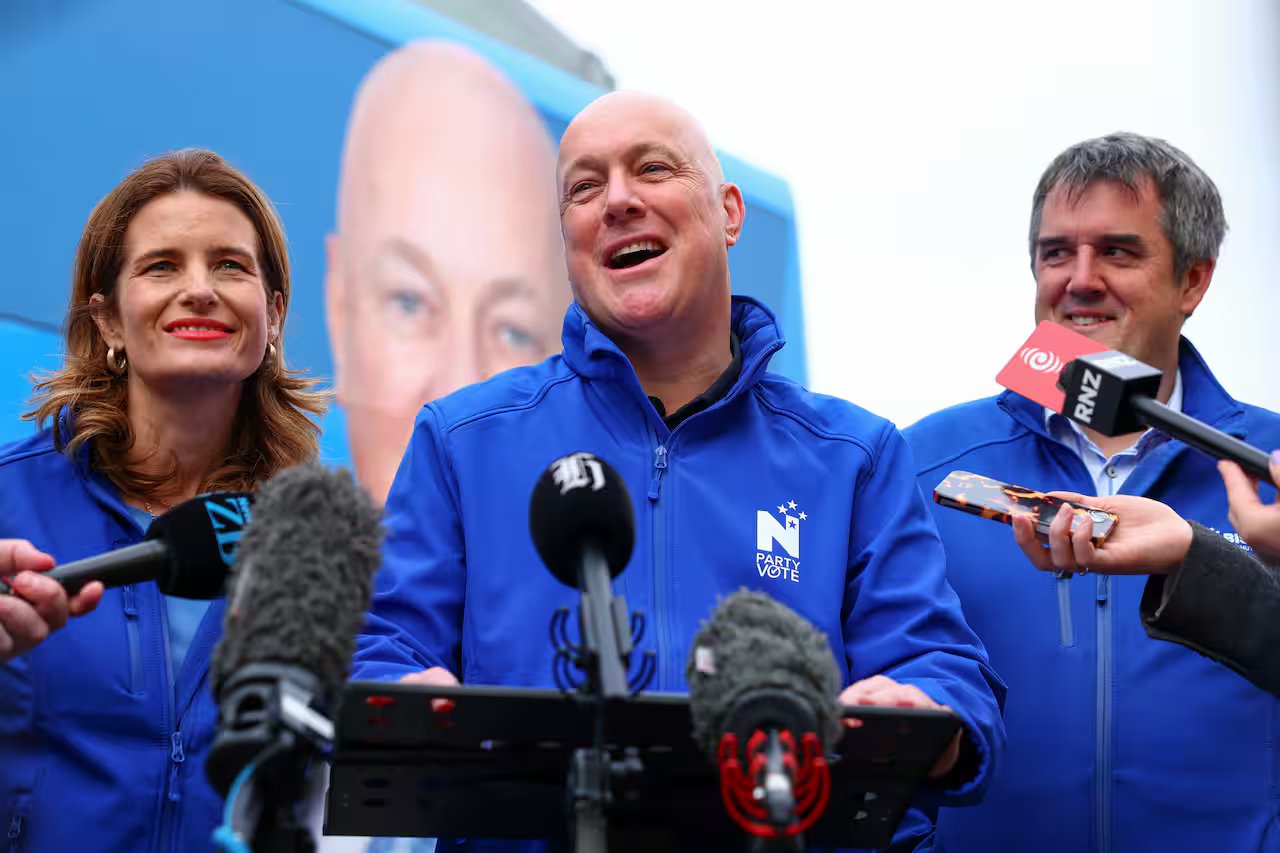
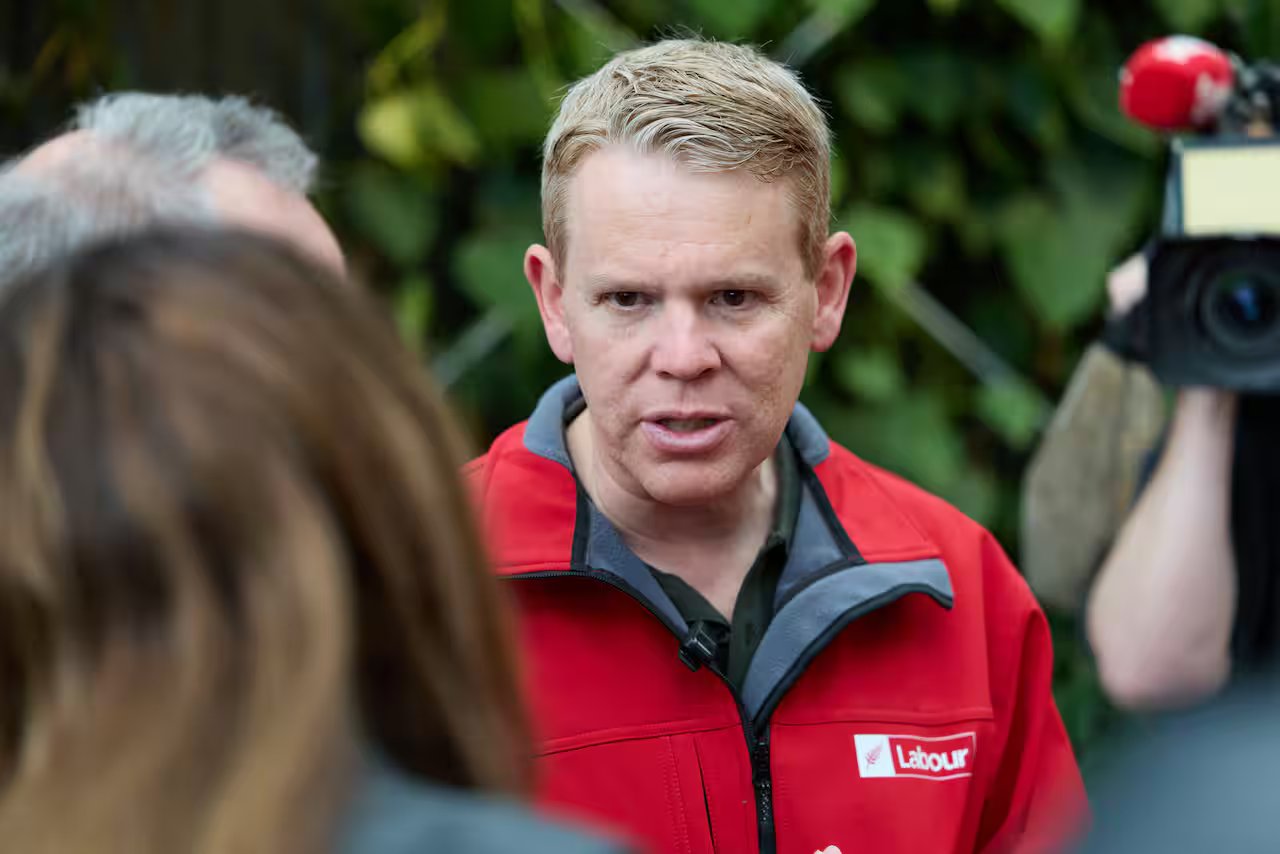
Saturday’s election is shaping up as a tight contest, with Prime Minister Christopher Luxon’s National Party polling at 30 per cent and the opposition Labour Party, led by former prime minister Chris Hipkins, on 29 per cent, according to the latest 1News Verian poll.
Government coalition parties ACT New Zealand and New Zealand First polled 10 per cent and 8 per cent respectively, leaving the right-wing bloc with a projected 58 seats — three short of the 61 needed for a majority in New Zealand’s 120-seat parliament.
The left-wing bloc, comprising Labour, the Greens and Te Pāti Māori (the Māori Party), would secure 56 or 60 seats, depending on the outcome of the Māori electorate contests and potential parliamentary overhangs.
The poll also puts the Opportunity Party on 6 per cent, potentially giving it seven MPs and a significant say in post-election coalition negotiations. Neither major bloc is projected to secure a majority on its own.
The election is being fought against a backdrop of mounting pressure on household budgets.
An Ipsos poll released last week found 64 per cent of respondents believed the cost of living was the country’s biggest issue, followed by healthcare at 45 per cent, fuel prices (31 per cent), the economy (30 per cent) and unemployment (19 per cent).
While inflation has eased from its post-pandemic peak, it remained at 3.7 per cent in the 12 months to September, above the Reserve Bank’s target range of 1 to 3 per cent. Although down from 4.1 per cent in the year to June, many households have yet to experience sustained relief.
National’s approach to tackling the cost of living centres on cutting government spending — including reducing the public service workforce by nearly 9,000 – and delivering tax relief.
Labour, meanwhile, has pledged to reduce household bills through free GP visits, capped public transport fares, a freeze on fuel taxes, and greater supermarket regulation. Its proposed capital gains tax on investment and commercial property would help fund its healthcare commitments.
Although frustrated with the pace of progress under National, Robb says she is leaning towards voting for either National or ACT New Zealand.
To be quite honest, I’d like a change, but that’s really not going to make much difference.
“I like the way National is going; I just wish they’d get there a little bit faster. I think a lot of the problems that we have are COVID hang-ups, which really you can’t blame on the government 100 per cent.”
Tajai Ririnui, meanwhile, is hoping Labour will take office, believing a change of government could bring relief to middle-and lower-income families.
As a Māori woman, she sees the current National-led government’s policy changes affecting Māori as another setback. She would like to see Te Pāti Māori in government but considers that unlikely.
“Our government seems determined to undermine Māori culture, and honestly, the state of things back home is heartbreaking,” she says.
We are a minority, unfortunately, in New Zealand … we get treated as kind of like outsiders in our own country.
Since taking power in 2023, the National-led government has abolished the independent Māori Health Authority (Te Aka Whai Ora), prioritised English in official communications and backed the Treaty Principles Bill, which sought to redefine aspects of how the Treaty of Waitangi is interpreted. The bill was defeated at its second reading in April 2025.

The government has defended its approach as promoting equal treatment and common understanding of public services and the law.
New Zealand’s Electoral Commission says about 126,000 enrolled voters have told it they are living overseas — up from 92,600 in 2023 — with the majority in Australia.
Spoonley says the growing number of overseas voters could be significant, given the traditionally younger demographic of New Zealanders living abroad and their potential influence on the election result.
“We’ve got people who’ve left New Zealand in the last two years … who I suspect are quite disgruntled with some of the policy settings, and want to know that they’re going to get a government that is more sympathetic.”
Would they ever return?
While Robb is a proud New Zealander, she struggles to see herself returning to New Zealand anytime soon once she’s established a life in Australia.
“Everybody I know that’s left New Zealand is loyal to New Zealand and wouldn’t have left if they didn’t have to,” she says.

“I will work out the rest of my working years in Australia,” Robb says.
I don’t want to die [in Australia], but New Zealand has to drastically change before I would consider coming back here, and I don’t see that happening before I retire.
Ririnui, however, says the plan is to return home
“We moved to Australia for the money, and that’s it. Our goal is to put our heads down, work hard and save as much as we possibly can over the next five, 10 years, with the hope of eventually returning home.
“Being Māori, we’re spiritually and wholeheartedly connected to our whenua [land] and our whānau [extended family]. And even though we’ve only been away for a short time, we can feel that something is missing from our lives. Even our girls feel it.”
For the latest from SBS News, download our app and subscribe to our newsletter.