Amid changing threats, Australia should be a world leader on AI, Wong says
In brief
- Penny Wong is warning AI, cyber threats and coercion are reshaping Australia’s security.
- The foreign minister will argue Australia’s case for a seat on the UN Security Council in a Senate speech on Tuesday.
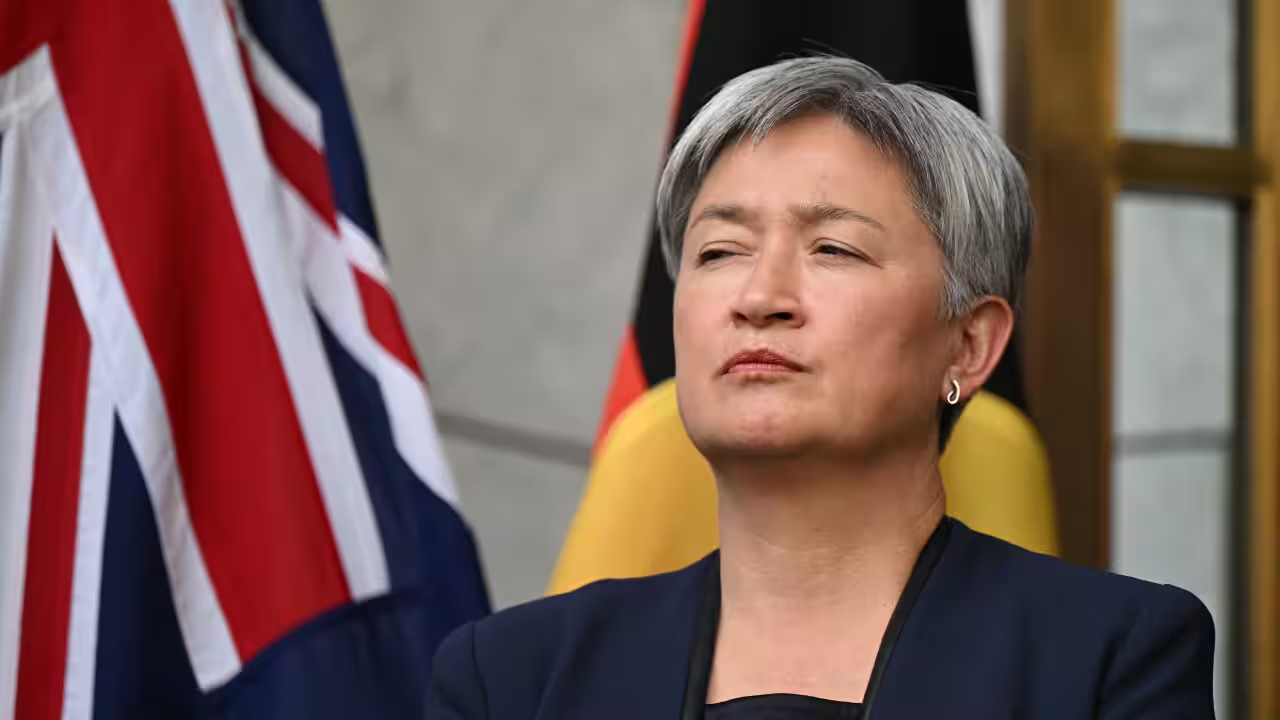
Foreign Minister Penny Wong will make a pitch for an Australian seat on the UN Security Council on Tuesday, arguing middle powers should have more influence while doubling down on commitments to both the United States and China.
The speech, titled Securing Australia’s future in a changing world, will be delivered to the Senate and describes an increasingly dangerous world where Australia defends international rules and institutions, while arguing artificial intelligence presents a national security challenge that Australia will help lead the world on.
“Australia has helped shape the international order before, in [nuclear] non-proliferation and in online safety,” Wong said. “With artificial intelligence, we intend to do it again.
“Artificial intelligence is reshaping the foundations of our societies, cyber attacks are more frequent and dangerous, and trade settings, investment flows, shipping lanes, food security, undersea cables and critical minerals are all being weaponised in this new era.”
It comes after the leaders of the US, China and Russia issued a “declaration toward peace” after a trilateral meeting last week, criticising the International Criminal Court’s jurisdiction and calling for diplomatic immunity for state officials.
Your trusted source for staying up-to-date with the world around you. Get free daily news updates and analysis, straight to your inbox.
Australia’s campaign for a non-permanent Security Council seat in 2029–30 was launched in September, and the government said it wants to work on conflict prevention, climate and ocean security, as well as a safe digital future. UN members will vote in June 2028.
The foreign minister argues that the US and China are increasingly willing to exercise power without accepting the constraints that have helped prevent major conflict.
Her answer is not for Australia to retreat from international institutions or abandon its US alliance but to build partnerships with other countries.
AI a national security threat
The speech will refer to reports that Russia is using AI for disinformation campaigns aimed at democracies.
“Russia authorised covert online disinformation operations, harnessing AI-generated deepfakes and impersonations of major news organisations to influence US elections,” Wong said.
“These tools make that interference faster, cheaper and harder to recognise.”
Wong’s speech follows warnings from ASIO director-general Mike Burgess that foreign actors are seeking to interfere in the construction of AI data centres “for nefarious reasons”.
There are six “fundamental shifts” reshaping the world, she said: growing coercion, changing great-power behaviour, the redistribution of power, the weaponisation of economic relationships, technological transformation and the weakening of collective institutions.
Wong acknowledges that great-power rivalry has paralysed institutions, including the Security Council, while arguing that Australia should seek a place on it.
A non-permanent seat would give Australia a voice and a vote, but not the veto power held by the five permanent members: China, France, Russia, the United Kingdom and the US.
Can Australia represent small countries while maintaining the US alliance?
Australian Institute of International Affairs CEO Bryce Wakefield, analysing Wong’s speech, noted the US alliance, regional engagement and the international rules-based order have guided Australian governments for decades, but now the region comes first.
“Relationships rather than the alliance stand as a separately identified priority,” Wakefield said. “The rules-based order remains essential, while resilience is added as a fourth pillar, recognising that domestic economic strength, technological capabilities and social cohesion are increasingly important sources of national power.
“It is also a powerful answer to Paul Keating’s dismissive remark in 2023 that Wong was ‘running around the Pacific Islands with a lei around your neck handing out money’. Keating argued that foreign policy was what Australia did with great powers, particularly China and the United States.”
Arrangements such as the Quad, cooperation among traditional allies, and flexible groupings with countries such as Canada, Japan and India allow Australia to concentrate influence on problems without needing universal agreement and help sustain order where traditional institutions are struggling, he said.
Wong described a regional strategy centred on Southeast Asia and the Pacific, investing in connectivity and development, and seeking a “region in balance, where sovereignty is respected”.
Speaking on ABC TV on Monday night, Wong said the speech helps explain to Australians why they may feel anxiety.
“The context here is that Australians are more anxious and rightly so about a world that’s changing,” Wong said.
“The world is changing before our eyes … [but] retreat from the world doesn’t buy you safety. Your security can only be found by dealing with the world before you. You have to be realistic, but you have to be optimistic, and I’m both.”
For the latest from SBS News, download our app and subscribe to our newsletter.