Albanese’s week unravelled by one-word description of Grace Tame
Welcome back to your weekly federal politics update, where Courtney Gould gets you up to speed on the happenings from Parliament House.
It’s a well-known strategy in politics — if things aren’t going your way, offer up something to change the headline.
Anthony Albanese got quite the splash this week after the news he volunteered support to Keir Starmer to remove disgraced former prince Andrew Mountbatten-Windsor from the line of succession.
“We initiated it,” the prime minister told ABC’s AM. “Australia likes being first and we have made sure everyone knows what our position is.”
Mountbatten-Windsor, who is eighth in line to the throne, had his titles stripped last year over ties to convicted sex offender Jeffrey Epstein. A UK official said its government was considering divesting him of his succession rights.
But that would be after a police investigation into allegations of misconduct in public office is completed. Australia had gone out early on this. Across the ditch, NZ PM Christopher Luxon’s response on the matter was telling: “We can announce it any way but our position is clear: it’s the same position as the Australian position but rather than a formal letter, we’ve been having conversations directly with the UK government.”

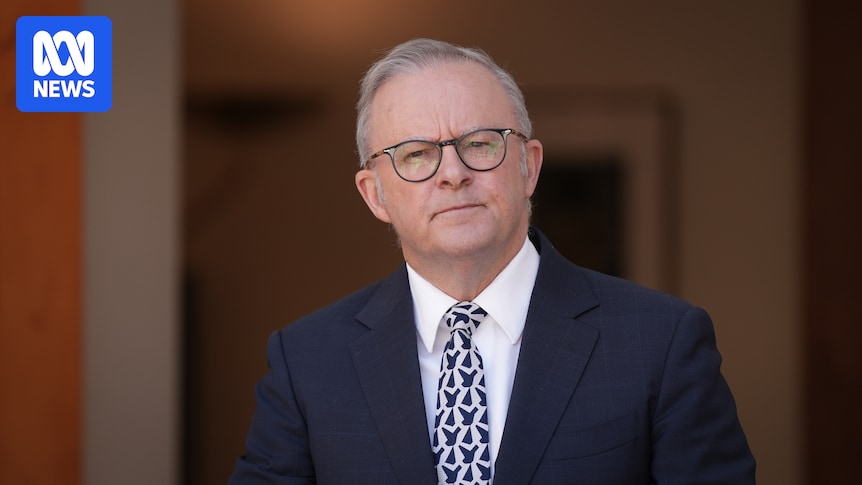
Anthony Albanese shot off a text to Keir Starmer to let him know his letter was on the way. (AAP: Lukas Coch)
A tragedy of Home and Away proportions would be required before Australia was ever faced with the prospect of the former prince becoming our head of state. And even if we started the legislative process to remove him from the line of succession, it could take years.
Albanese said he was confused about the run in the media that his letter to Starmer received, as if it was designed for anything other than press coverage.
A distracting story
The prime minister would argue he still fielded questions about other issues. It’s true, he did. But he bristled when it was put to him directly that his tough talk on Mountbatten-Windsor was a distraction from the so-called “ISIS brides”.
“Oh for goodness sake. It was reasonable … this is an issue that came about because the UK has said that it’s being considered there and therefore, this is our way of encouraging them to commence the action.”
Albanese has ramped up his talk about the cohort of women who travelled to the Middle East and have spent the past seven years in a Syrian camp. They’re now trying to return home. The government is refusing to provide any information other than it won’t provide assistance to the women.
NSW Premier Chris Minns took a slightly different tone this week. He had no sympathy for the women but he had concern for the children. He was transparent and said a third of the cohort could return to his state and preparations must be made. Discussions have been underway since last year about how to handle their potential arrival.
As the ABC’s Clare Armstrong wrote today, there is no leader in Australia who isn’t aware of the constitutional fact that they can’t ban these women, as citizens, from returning. So, it’s being fought in the court of public opinion.
The court of public opinion is where Albanese also found himself this week after being backed into a word association game during a Q&A in Melbourne.
He described Pauline Hanson as “divisive”. One Nation voters were “frustrated”. Donald Trump was simply “president”. He couldn’t offer up a word for Barnaby Joyce but said Mountbatten-Windsor was a “grub”.
What about Grace Tame? Albanese paused, raised his hand in one armed shrug and then responded: “Um …. difficult.”
The clip, posted online by many including the ABC, received dozens of comments including from Greens leader Larissa Waters. “Labelling women as difficult won’t silence us,” she wrote.
By Thursday morning the prime minister offered a qualified apology. “If there was any misinterpretation, then I certainly apologise,” adding he was trying to refer to the former Australian of the Year’s difficult life.
Loading…
“That’s why it’s impossible to describe people in one word,” Albanese said.
Albanese and Tame were once publicly close. She rose to national attention in 2021 after she was awarded Australian of the Year for her work advocating for child sexual abuse survivors.
A frosty expression towards prime minister Scott Morrison during a meeting at The Lodge went viral. Albanese called her a “powerhouse”.
The prime minister still thinks she’s a strong and powerful advocate even if they have a difference of opinion on some issues, such as his opposition to her chanting “globalise the intifada” at a pro-Palestine rally.
Tame responded by sharing support from friends to her Instagram stories. She later shared a post from satirical news site the Betoota Advocate comparing Albanese’s comments to Scott Morrison’s.
“Both men, when called out for their behaviour towards me, have used ‘she’s had a difficult life’ as a condescending justification. Get some new material boys!” she wrote on her Instagram post.
Loading
The train keeps going (and going)
Speaking of new (old) material, it would be remiss of this newsletter not to touch on the return of high-speed rail to the headlines. Nothing screams distraction, or an election is coming, quite like the mention of high-speed rail.
We’ve been re-visiting the ambition to build a high-speed rail line longer than I’ve been alive. As a former infrastructure minister, Albanese is pretty jazzed about the idea of being the prime minister that could make it happen.
The government chipped in another $230 million this week to hash out all the details about how much it would cost and if it could stack up financially. At the end of the process, it says it will be shovel-ready by *checks notes* the next time an election is due to take place. What a coincidence.
Much like the work in getting the high-speed dream ready, the treasurer and finance minister have been not so quietly clearing the ground in the long journey towards capital gains tax discount reform.
As my colleague Tom Crowley noted, they’re not outwardly saying, “Hey, look this is happening!!!” but they’re certainly “looking at it” while keeping it in present tense that the plan hasn’t changed.
What does this all mean? They’re setting up the narrative so the public isn’t shocked when, say a couple of weeks or days out from the budget, the prime minister finally announces the plan as expected has changed.
A bomb threat
On a more serious note, this week the prime minister was forced to evacuate his official residence in Canberra due to a bomb threat.
The threat was linked to performances in Australia by the Shen Yun group — which has been linked to the Falun Gong spiritual movement that is banned in China.
It was shocking that Albanese was evacuated and, as David Speers wrote, the incident should not be treated as a bizarre outlier. Thankfully, it received the rightful condemnation from across the political spectrum from the Greens to Pauline Hanson.
Albanese returned to a call he’s made all too often in recent months: “I think it’s just a reminder, turn the heat down, for goodness’ sake.” That reminder should ring in the ears of every politician when they return to parliament next week.
Speaker Milton Dick has been doing his best for some time now to call out the overheated language when it happens in the chamber during Question Time. But it goes beyond just him.
As Speers wrote, the security threat should act as a reminder that the language we use has consequences and should be called out in real time as it happens.