Cambridge offers botany course that inspired Darwin after rare archive uncovered | Plants
Plant specimens and teaching materials that inspired Charles Darwin and qualified him to work as a naturalist on HMS Beagle have been unearthed from an archive in Cambridge and will be used for the first time to teach contemporary students about botany.
The fragile specimens, ink drawings and watercolour illustrations of plants belonged to Darwin’s teacher and mentor, Prof John Stevens Henslow, and have been stored in Cambridge University’s herbarium for nearly 200 years.
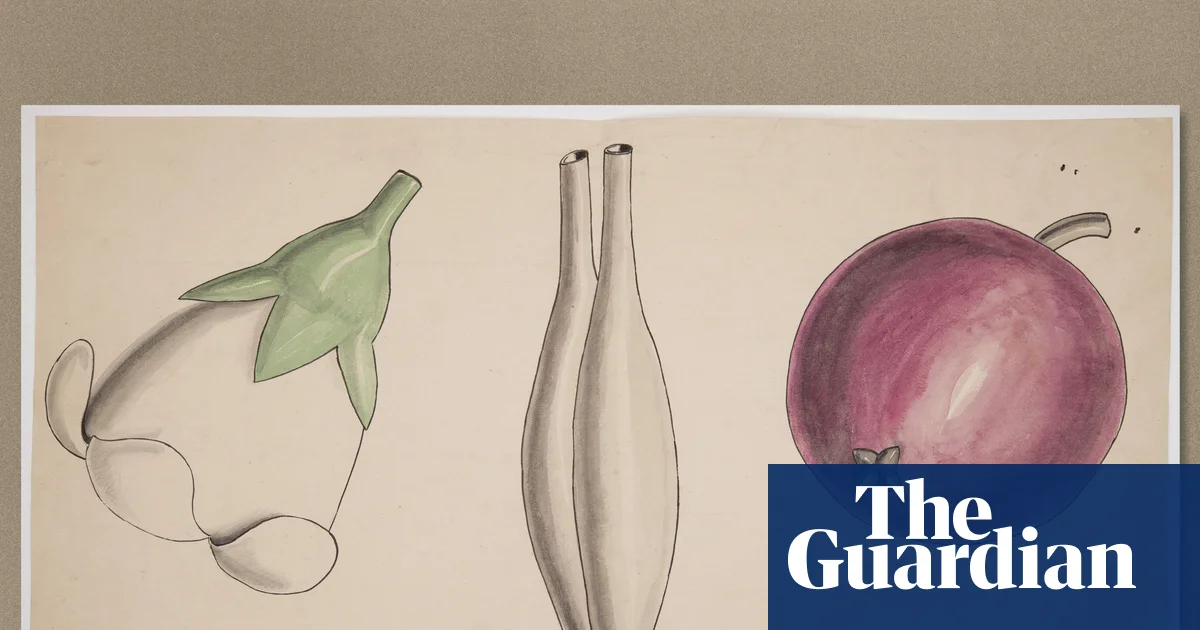
Some of the “very rare” watercolours and drawings, published for the first time in the Guardian, are believed to be the earliest botanical illustrations Henslow produced to teach his students. Others are specimens of plants Darwin would have seen for himself.
“When Darwin came to Cambridge, he studied botany formally for the first time. He enjoyed Henslow’s course so much that he took it three years in a row,” said Dr Raphaella Hull, acting head of learning for Cambridge University Botanic Garden (CUBG). “Henslow introduced him to the concept of variation, laying the foundation for Darwin’s later theory of evolution.”
As an Anglican clergyman and natural theologian, Henslow believed studying plants could reveal God’s wisdom and closely observed variations within plant species as he sought to document the infinite extent, utility and magnificence of divine creation.
He collected the specimens and designed the illustrations so he could begin offering Cambridge undergraduates an annual botany course in 1827.
When Darwin arrived in Cambridge in 1828, he became one of the first students to attend Henslow’s groundbreaking five-week course. Darwin already had an interest in the natural world, piqued by a natural history group he had joined while studying medicine at Edinburgh University. But he had dropped the course after two years, realising he did not want to follow in his father’s footsteps to become a doctor and heading instead to Cambridge intending to become a clergyman.
Henslow took Darwin and his fellow students on “herborising excursions” into the Cambridgeshire fens and taught them how to identify, categorise and collect plants, while systematically observing the adaptations of different plant species to their environment.
This formed Darwin’s introduction to the scientific study of botany and the insights that rigorous collection of empirical data could offer about the natural world. He later described Henslow as having “influenced my whole career more than any other”.
“I fully believe a better man never walked this Earth,” he wrote when Henslow died in 1861.
CUBG is reviving the spirit and content of Henslow’s teaching by launching a four-week summer course in botany aimed at internal and external undergraduate and postgraduate students, academic researchers and professionals working in ecology, horticulture, conservation or related fields.
During the course, students will be taught about botany using the original teaching materials and hands-on techniques Henslow used to teach Darwin in the 1820s, as well as field excursions to the kinds of habitats Darwin visited in the Cambridgeshire countryside.
“Botany has all but disappeared as a stand-alone undergraduate degree in the UK, and that creates a real gap in how people are trained to understand plants,” said Prof Sam Brockington, CUBG curator. “Even in plant science laboratories, we increasingly find otherwise talented students who don’t have the language or conceptual framework to describe plant form and diversity.”
One of the motivations for creating the course was to address that gap. “We designed what we felt was the ideal four-week immersive programme in botany, and when we compared it with the curriculum that Henslow taught in Cambridge in the 19th century, the overlap was remarkable. In many ways we are not just drawing inspiration from that tradition, we are reviving the spirit of Henslow himself,” said Brockington.
Henslow taught botany in a way that proved to be profoundly popular, said Hull. “It’s the fullest, most complete way to teach botany. You have to get your hands on the material. You have to go and see it in the field … you pull apart the material, you dissect it, you see how it smells, you see it in its natural habitat.”
Today, plant scientists research the processes of plants on a cellular level and their work can become very siloed and species-specific, said Hull. “Having an understanding of plant morphology and plant diversity allows you to place your findings within a broader context. In terms of biodiversity loss and climate change, being able to observe and understand what is around us is essential.”
She has noticed plant science students often feel they lack species-identification skills but are eager to develop them. “If we don’t have botanists who are able to read the environment and the species within them, we don’t have a good way of understanding the condition of habitats across the world,” she said.
Records suggest Darwin was a particularly intrepid student. While attempting to collect bladderwort for Henslow on a boggy heath, the young naturalist is reported to have slid underwater into a ditch, greatly amusing his fellow students – only to emerge shortly afterwards triumphantly clutching the prized water plant.
When the aristocratic captain of HMS Beagle, Robert Fitzroy, offered Henslow the post of “gentleman naturalist” onboard his ship in 1831, the professor turned it down and recommended 22-year-old Darwin instead. Darwin then faithfully posted the specimens he collected during his voyage back to his old tutor and mentor. “They remained friends for the rest of their lives,” said Hull.
Brockington said Henslow’s use of illustrations on his course was pioneering. “He was delivering PowerPoint talks 200 years ago.” He hopes students who attend the new four-week course will feel inspired by the materials and methods Henslow used to teach Darwin. “It’s like standing on the shoulders of giants.”
Before Henslow began teaching his course, no lectures had been delivered in botany at Cambridge for decades. “We saw a real gap – and Henslow saw that same gap,” said Hull. “He questioned how scholars were not seeing botany as the absolute essential stepping stone to more important discoveries. He saw it as the foundation. We see it as the foundation, too.”