
How do Australia’s petrol prices compare globally?
All eyes are on fuel prices as the war in the Middle East threatens global supply chains.
Iran’s naval blockade of the Strait of Hormuz, through which one-fifth of the world’s fuel passes during peacetime, has sent petrol prices skyrocketing, and governments across the world scrambling to prevent panic buying, price gouging and fuel shortages.
In the early days of the war in the Middle East, petrol prices jumped across Australia, prompting the consumer watchdog to produce weekly fuel price monitoring updates.
The Australian Consumer and Competition Commission (ACCC) said petrol and diesel price rises between 20 February and 11 March varied widely between Australian capital cities, but had increased by nearly 50 cents on average.
But on a global scale, even with our vulnerable supply chain and geographical isolation, Australia sits around the mid-range for gasoline prices.
Where do Australia’s fuel prices sit globally?
According to GlobalPetrolPrices.com (GPP), an independent tracking site for global energy, petrol and gas prices, Australia has remained around the mid-range for petrol prices, both before and after the war.
The website uses data from government institutions, regulatory agencies, statistical institutes and major media outlets to track weekly fuel figures for more than 160 countries.
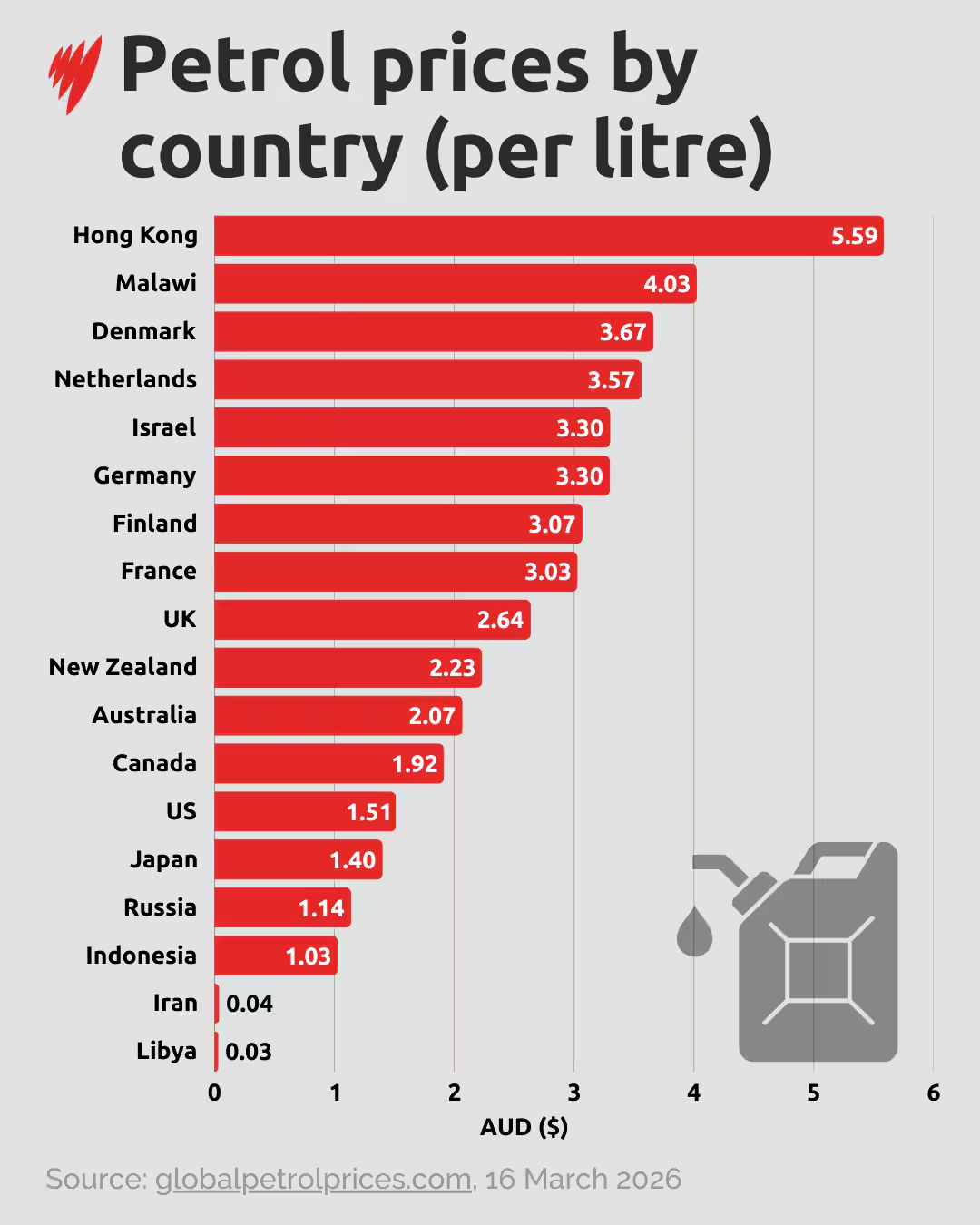
GPP data puts Australia 61st out of the top 100 countries for gasoline price per litre, with the average price per litre $2.07 in March 2026.
It’s cheaper to fill up here than in many of our OECD neighbours, except for the United States, which has dramatically low fuel costs, at $1.06 per litre.
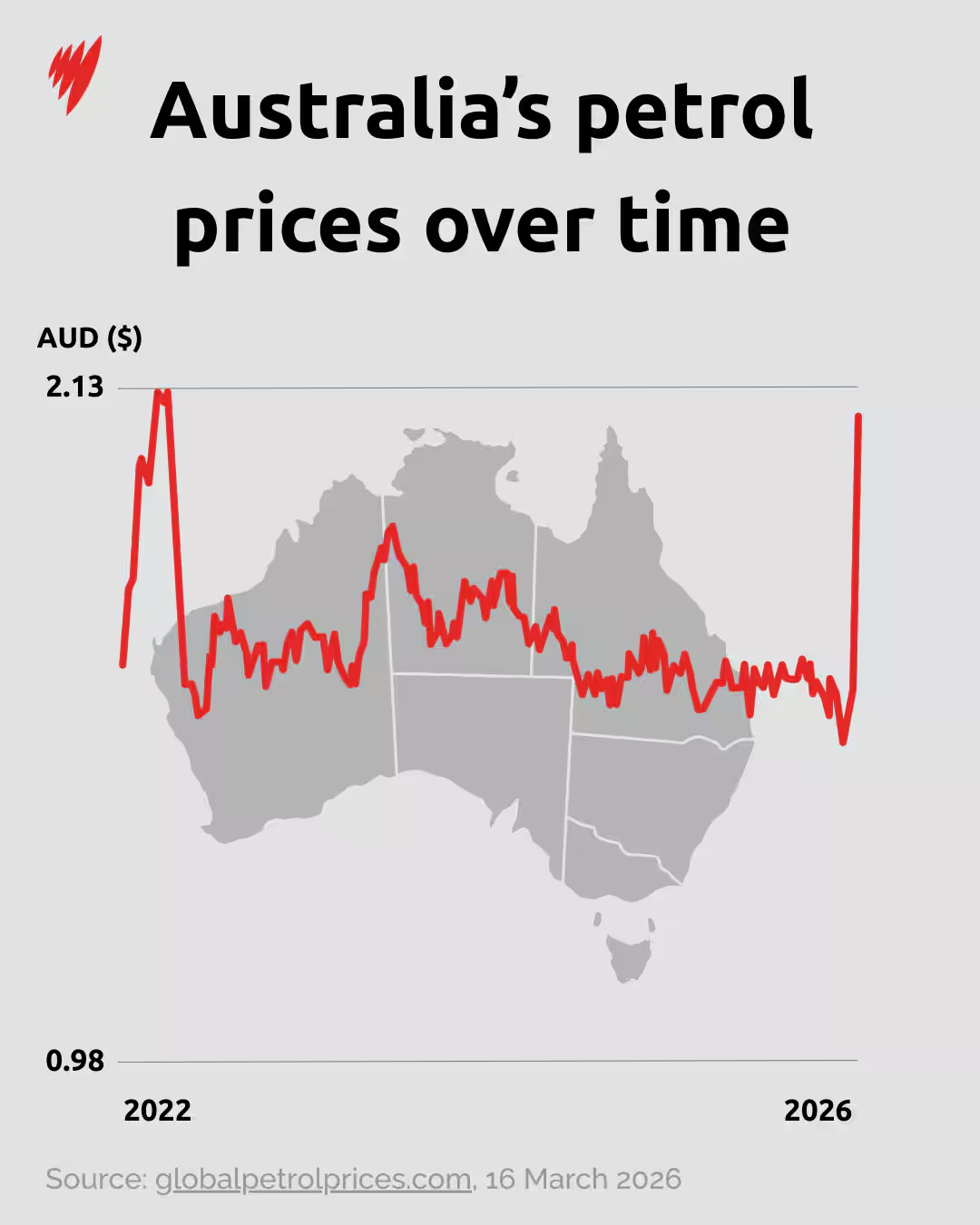
Australian petrol prices have increased since the beginning of the war in the Middle East, by roughly 50 cents in the past eight weeks, from $1.57 to $2.08, according to the data.
The climbing price mirrors similar increases around the world, as Iran’s naval blockade of the Strait of Hormuz continues while it’s at war with Israel and the US.
What is unique about Australia’s fuel system?
Associate Professor of Finance at the University of New South Wales, Mark Humphrey-Jenner, said there were several factors affecting fuel pressure in Australia that are combining for pain for consumers.
“First, the sheer amount of imports we rely on,” he told SBS News.
In the past 20 years, Australia has switched to importing almost 90 per cent of our daily consumption — generally taken as refined product from South Korea, Japan, Singapore, Malaysia and Taiwan.
“Second, the geography of fuel supply in Australia. We need to transport that fuel from the port where it lands. And that ultimately means that if we get a supply disruption, it takes a while for the supply chains to catch up.”
Humphrey-Jenner said it was difficult and expensive for Australia’s systems to bounce back.
“Say we get to an extreme scenario … we couldn’t just go back to normal when exports resume. We need to get (fuel supplies) shipped throughout the system, and delivered all across the country, and all of that takes time and money.”
Humphrey-Jenner said that was a “big difference” that set Australia apart from other countries.
“The US, for example, produces a significantly greater proportion of its fuel and indeed exports a lot. But also, you’ve got slightly shorter distances between refineries in the US, relative to how things are located in Australia.”
And with only two refineries, Australia relies heavily on global supply chains.
“If we had more domestic oil refineries, then potentially we’d be able to weather this more,” Humphrey-Jenner said, but emphasised “potentially”, because Australia wouldn’t necessarily have to commit hypothetical refined products to the domestic market.
Energy Minister Chris Bowen said the nation’s fuel supply remained stable despite some regional areas experiencing shortages, telling critics “rationing is not a conversation that we need to have at this point.”
“We’ve been striking agreements, company by company, that they will release more of that fuel into the regions and we’re starting to see some of that flow,” he told ABC News.
Prices don’t tell the whole story
A key factor influencing petrol prices is Australia’s fuel tax, which sits at just under 50 cents per litre.
Since 2014, it has been indexed and has been able to fluctuate with inflation.
The fuel excise has been cut before, during COVID-19; however, as Humphrey-Jenner said, it’s unlikely the government would implement such a measure while fuel supply was an issue.
“While I’m not necessarily the biggest fan of the fuel excise, there’s a separate issue about whether and how it should operate.
“The problem with cutting it is you don’t necessarily want to make fuel prices cheaper when you have issues with supply levels, you don’t really want people to go out and buy more if they don’t have to.
“You want people to try to use less of it, so that you don’t need to get into rationing.”
Humphrey-Jenner said that although Australia’s gasoline price was lower than that of other OECD countries, any sharp fluctuations would be keenly felt.
“We’re accustomed to our baseline petrol price, and that’s inherently normal, right?
“You budget your groceries based on that price, it’s what you’re used to, it’s incredibly important. And if that price starts to go up, then everything starts to look relatively expensive, relative to what you were previously paying.”
And, he said, while the global gasoline price chart was useful to contextualise price increases, it didn’t tell the whole story.
Reliance on oil, whether it’s refined petrol or diesel, differs greatly across Australia and the rest of the world.
As Prime Minister Anthony Albanese convenes a national cabinet meeting today to discuss the country’s fuel supplies, Australians will be hoping for a solution to shortages and price spikes in rural areas.
For the latest from SBS News, download our app and subscribe to our newsletter.