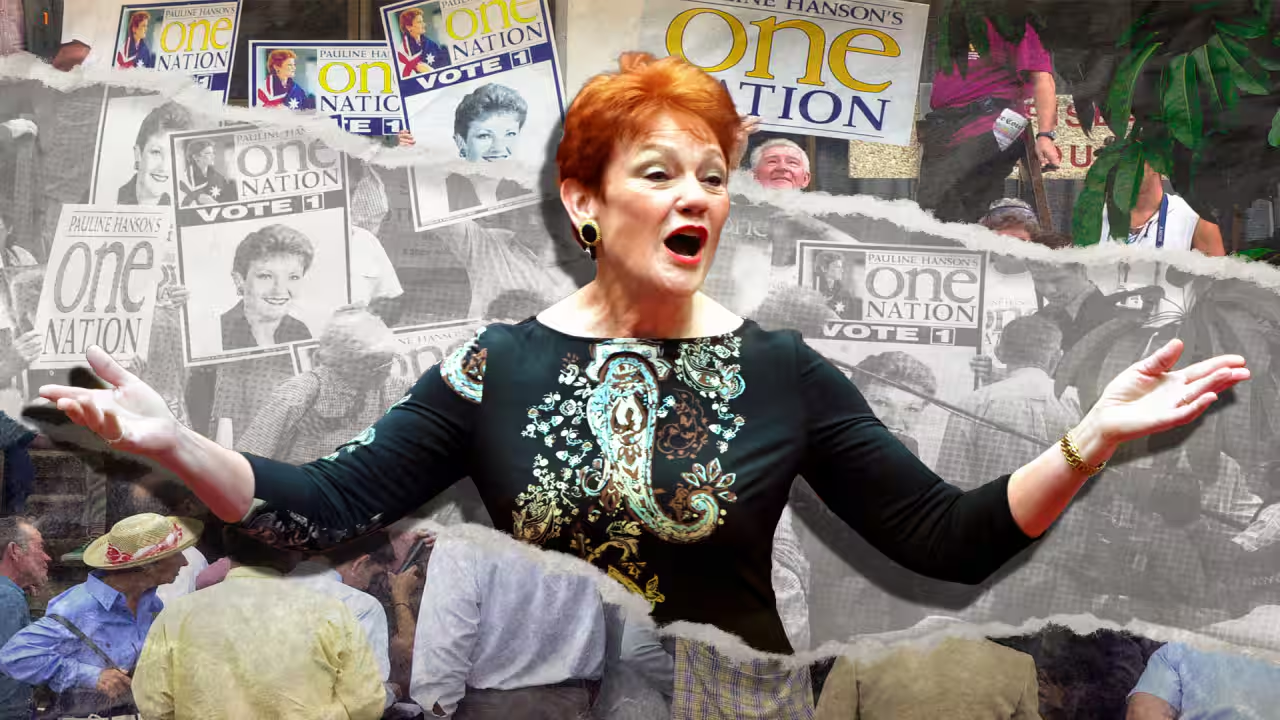
Inside the voter shift: Can One Nation ride its poll surge to parliament?
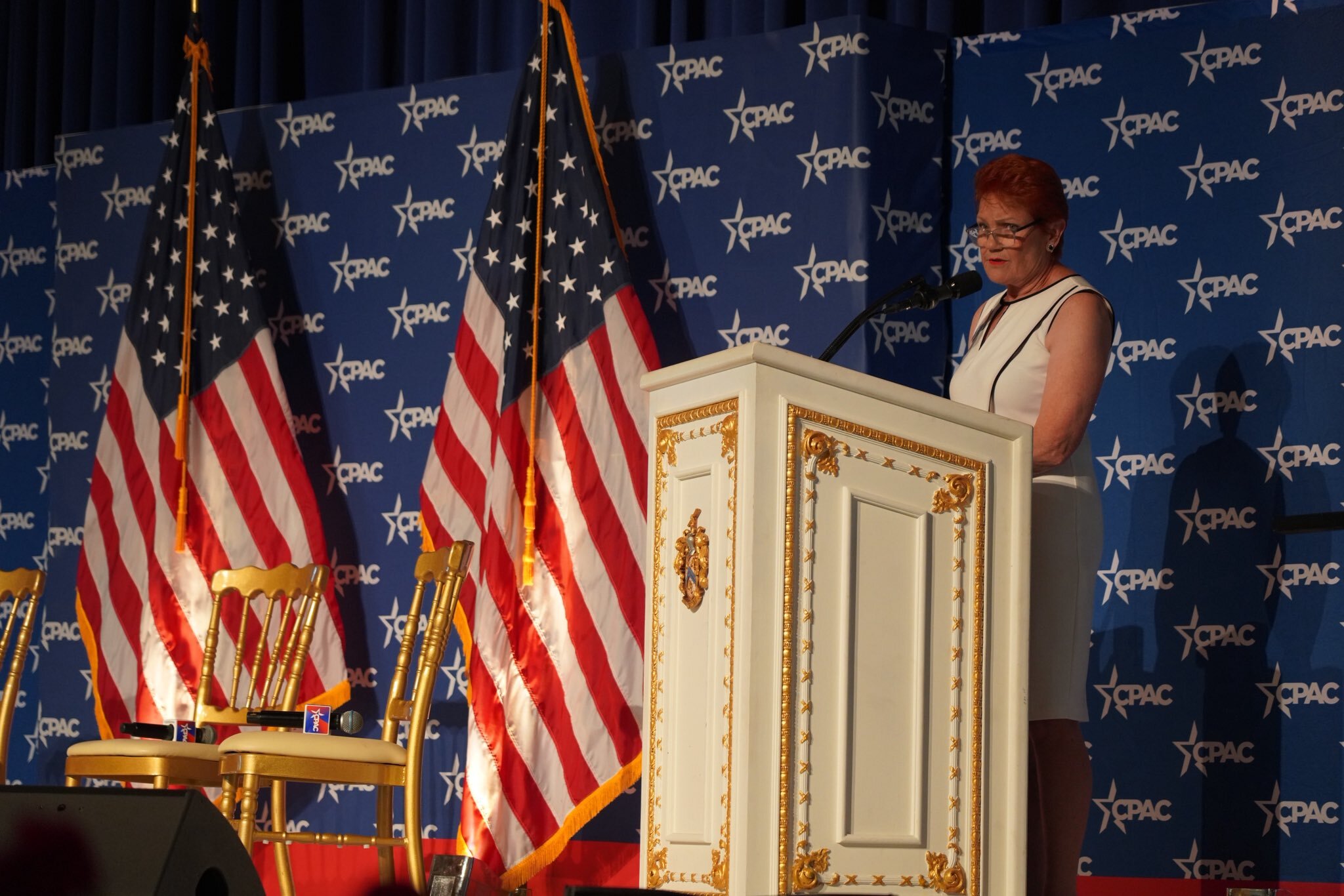
Pauline Hanson was “Donald Trumping” decades before the United States president was, a fact the Queensland senator has leaned into during her party’s recent poll surge.
“I’ve been around long before Nigel Farage and long before Trump, so therefore I’ve set the record, my record, of what I want,” Hanson said in January, facing the media as One Nation’s primary vote hit double digits for the first time in two decades.
The latest Newspoll has One Nation at 27 per cent of the primary vote, recording mid to high 20s across Redbridge and Resolve too — polling that puts it ahead of the Coalition.
It’s a measure of success not seen since the party’s height in 1998, when it polled at nearly 23 per cent nationally and picked up 11 seats at the Queensland state election.
One Nation’s fortunes appear to be closely tied to its blunt, outspoken and often polarising 71-year-old leader, who is enshrined as leader for life in its constitution and holds the power to name her successor.
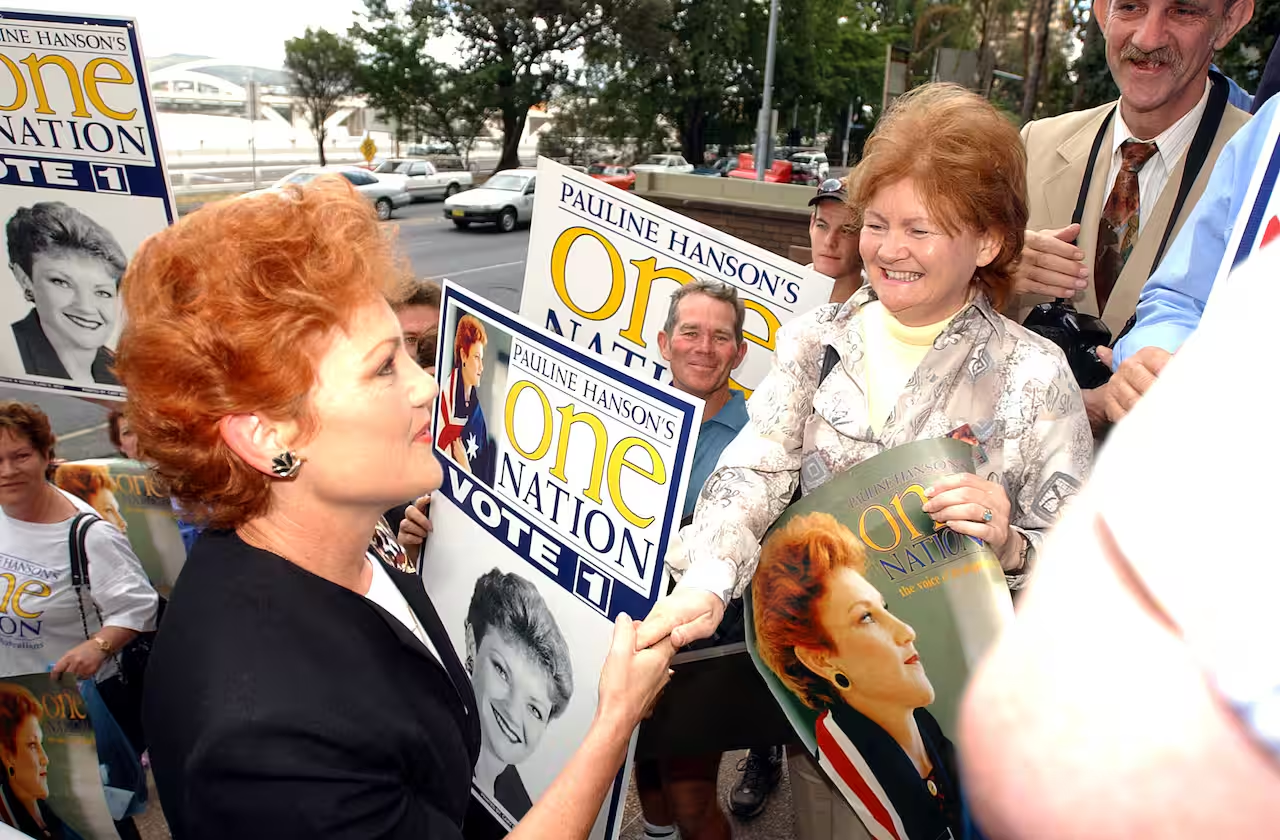
But before those conditions, One Nation forced Hanson out in 2002. The following year, she served 11 weeks in jail for electoral fraud, a conviction later overturned.
One Nation fell largely into oblivion between 2004 and 2011, during which time Hanson made three attempts to re-enter politics at the federal and state levels as an independent. These political failures were all but forgotten as Hanson returned to One Nation in 2014.
Almost 30 years since it entered the political sphere, the question remains: what does One Nation stand for, and can it convert its popularity into electoral success?
Why are people turning to One Nation?
Redbridge Group director Simon Welsh says the move to One Nation is largely limited to right-wing voters in outer suburban and regional seats, going so far as to state that “we’re seeing the collapse of the Liberal vote”.
He attributes it to a “loss of faith” from voters who bought into the Howard era of individual aspiration, explaining they have been “belted through the global financial crisis, loss of superannuation, the impacts of globalisation in the workforces … wiping out whatever was left in terms of economic self-sufficiency”.
“Big gains have been in gen X and younger boomers, and particularly gen X men and younger boomers. There is a gender disparity, but that’s not to say women aren’t moving as well,” Welsh says.
He argues that linking economic issues, such as the inability to afford a home, to immigration or to what he describes as identity politics, is at the core of One Nation’s appeal.
“Because the Liberals, particularly, have to worry about that moderate flank, they can never do the things on immigration that One Nation can do,” he says.
One Nation acknowledges its recent membership surge is at the “expense of the Liberal and National parties”, which, according to a spokesperson, are divided on issues such as net zero and immigration.
“Senator Hanson’s consistency and authenticity are seen positively in contrast with the major parties,” One Nation’s spokesperson told SBS News.
Jordan McSwiney, a senior research fellow at the Centre for Deliberative Democracy at the University of Canberra, highlights that Hanson frequently cited the 2014 Lindt cafe siege ahead of her return to parliament.
“Similar to [the Bondi terror attack], Hanson was very successful at inserting herself and the party into that debate and connecting that debate to questions of immigration, national security and so forth,” he tells SBS News.
McSwiney attributes Hanson’s success to people being more receptive to hardline immigration rhetoric in the aftermath of an attack and her long-standing focus on the issue, which he says has given her “credibility in the space”.
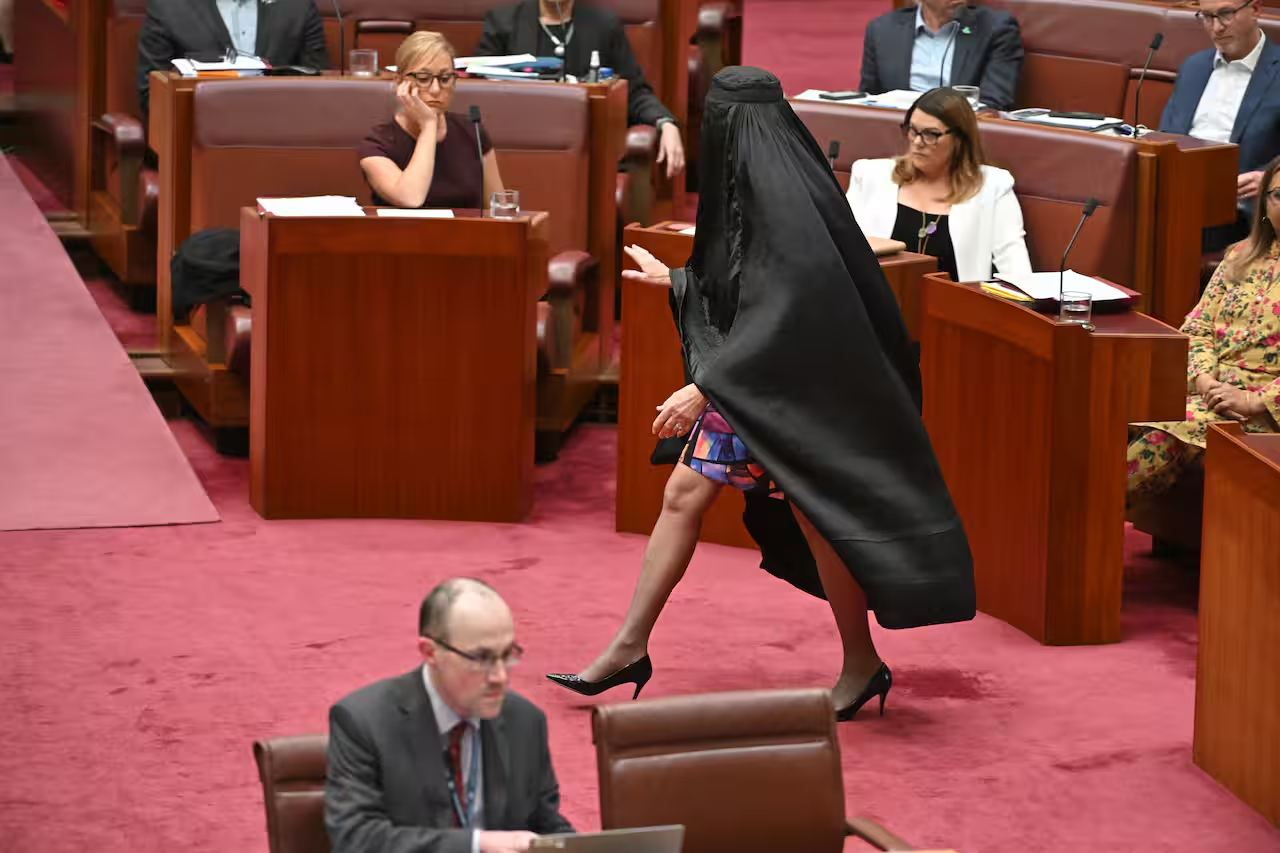
McSwiney says appearances on Dancing with the Stars and a paid contributor slot on Sunrise — at the time the most popular breakfast show — kept her in the public consciousness and contributed to her election in 2016.
Back to the 90s: Immigration and Indigenous affairs
McSwiney describes One Nation as a nativist party, explaining it as a “particular kind of radical exclusionary nationalism”.
It’s the idea that the nation should be a homogenous block, in Hanson’s view, of a predominantly white, predominantly Christian, ‘Australian’ nation.
The target has changed over time from “swamped by Asians” in Hanson’s maiden speech, to Muslims when she was re-elected in 2016, xenophobia towards Asians at the height of the COVID-19 pandemic, and “bad Muslims” following December’s Bondi terror attack, which killed 15 people.
Anything foreign — whether ideas, religions or people — is viewed with scepticism and fear, McSwiney says, adding it’s “not compatible, not desirable, and a threat to the homogenous nation”.
This belief has underscored two core policies in Hanson’s arsenal since the 1990s: immigration and Indigenous affairs.
One Nation proposes capping the number of visas to 130,000, claiming it will cut current migration levels of “over 570,000”.
However, this figure refers broadly to gross overseas migration, which was 568,000 in 2024-25, according to the Australian Bureau of Statistics (ABS). Net overseas migration (the number of migrants who arrive minus those who leave) was 306,000 — down from 429,000 a year earlier.
The federal government’s official permanent migration program actually supports far fewer places than One Nation suggests. In September, the Albanese government announced it would set permanent migration levels at 185,000 in 2025-26, keeping the previous year’s settings, according to the Department of Home Affairs.
Pressed on where cuts would come from, a One Nation spokesperson told SBS News it would focus on areas that “do not bring value to the economy”.
They suggested removing the ability for international students and temporary workers to bring over family and ensuring that those arriving temporarily “return home when work or study ends”, but did not specify which visa classes would be affected.
While temporary visa holders declined in 2024-25, ABS data shows the three largest contributors are international students (157,000), working holiday makers (78,000) and temporary skilled visa holders (46,000) — together accounting for more than double One Nation’s proposed cap, making it unclear which group it would target.
Hanson has repeatedly linked migration levels to the housing crisis.
Alan Gamlen, director of the Migration Hub at the Australian National University, is among experts who argue immigrants are critical to filling skill shortages, having only a minor impact on housing or rental prices.
“This is partly because migrants contribute to both the supply and demand of housing. So as well as taking up homes, they build new homes,” he tells SBS News.
McSwiney says the other true through line to Hanson’s politics is “her anti-Aboriginal and Torres Strait Islander racism”.
In 1996, a letter she wrote to the Queensland Times in which she claimed Aboriginal people were being “showered” with opportunities not available to others caused the Liberal Party to disendorse her. But she eventually won the Queensland seat of Oxley as an independent, with a 19 per cent swing against Labor.
Thirty years later, One Nation’s policy platform argues it will “achieve equal rights and treatment for all Australians” by ending native title claims and land transfers to Indigenous communities.
One Nation also proposes abolishing the National Indigenous Affairs Agency, claiming it stands in the way of closing the gap, and wants welcome to country rituals wound back.
What else does One Nation stand for?
While One Nation has become synonymous with cuts to immigration, it put forward several other policies in the months leading up to the 2025 federal election last May.
In a bid to address housing affordability, One Nation said it would introduce a five-year pause on charging GST on building materials for new homes valued up to $1 million and allow superannuation funds to invest a portion of a person’s super into their home.
“When the home is sold, the super fund takes the commensurate return on investment for the individual’s super. This way, the individual’s super remains completely intact,” a One Nation spokesperson explained.
Before Christmas, it launched an energy policy, proposing to cut electricity bills by introducing a 15 per cent domestic gas reserve and building a pressurised water nuclear reactor in regional NSW, estimated to cost $6.8 billion based on overseas projects.
The party has also proposed building three new coal power plants in Collinsville (Queensland), Port Augusta (South Australia), and the Hunter Valley in NSW.
A staunch stance against net zero would also lead them to withdraw from the Paris Agreement — a legally binding international treaty on climate change — and abolish the climate change department as well as relevant programs or agencies.
One Nation has proposed a family tax change that would allow a couple with a child to combine their incomes, reducing their tax bill.
They estimate that two individuals earning $60,000 each would save $9,533 annually, but more importantly, it would allow one parent to stay at home.
The party’s health plan includes cracking down on fraud in the Medicare system — referring to a 2023 report that up to $3 billion is lost annually — and increasing rebates to reimburse GPs so bulk billing is more widely available.
Can One Nation win lower house seats?
Although far-right politics have become more mainstream internationally, Australia has been slower to replicate this trend, according to McSwiney. Right-wing parties, including One Nation, have not achieved comparable electoral success as their European and North American counterparts.
“They’ve had a terrible time vetting and selecting candidates, quality candidates that stand for election … Every election there’s a suite of them that are resigned or investigated by the AEC [Australian Electoral Commission],” he says.
The polling is all good and well, but One Nation as an organisation has historically not been able to translate that into votes in the sense that it just, it doesn’t campaign well.
McSwiney says due to its rising popularity, One Nation could be in a stronger financial position ahead of the 2028 election, which would increase its chances of contesting several seats, but stresses, as with the voting, this would be “unprecedented”.
Part of it boils down to Australia’s preferential voting system, with candidates that are engaged in a multi-candidate contest knocked out in stages and their votes transferred to the next preference.
In 2025, Greens voters preferenced Labor over the Coalition, assisting in the loss of several Liberal seats. In contrast, One Nation voters favoured the Coalition.
Welsh says, “it’s all going to be about where those kind of ideological blocks park themselves to either deliver a One Nation seat or to block it,” arguing the risk was highest in regional Queensland, where One Nation has had a presence for decades.
He views the upcoming by-election in the federal seat of Farrer in NSW, following Sussan Ley’s resignation, as the live test case for preference flows and voting dynamics.
“If they stand a known quantity like Helen Dalton, I could see a scenario where they hoover up all the minor right vote and a big chunk off the Liberals/Nationals to get up to 40 per cent on the primaries.
“All the socio-demographic ingredients are there for One Nation.”
For the latest from SBS News, download our app and subscribe to our newsletter.