17 Behind-The-Scenes Secrets You Probably Didn’t Know About The Making Of Backrooms
1. Backrooms’ journey to the big screen was a surprisingly long and winding one
Rather than being an adaptation of a book, TV series or even video game, Backrooms started life as a viral photo.
Yes, really.
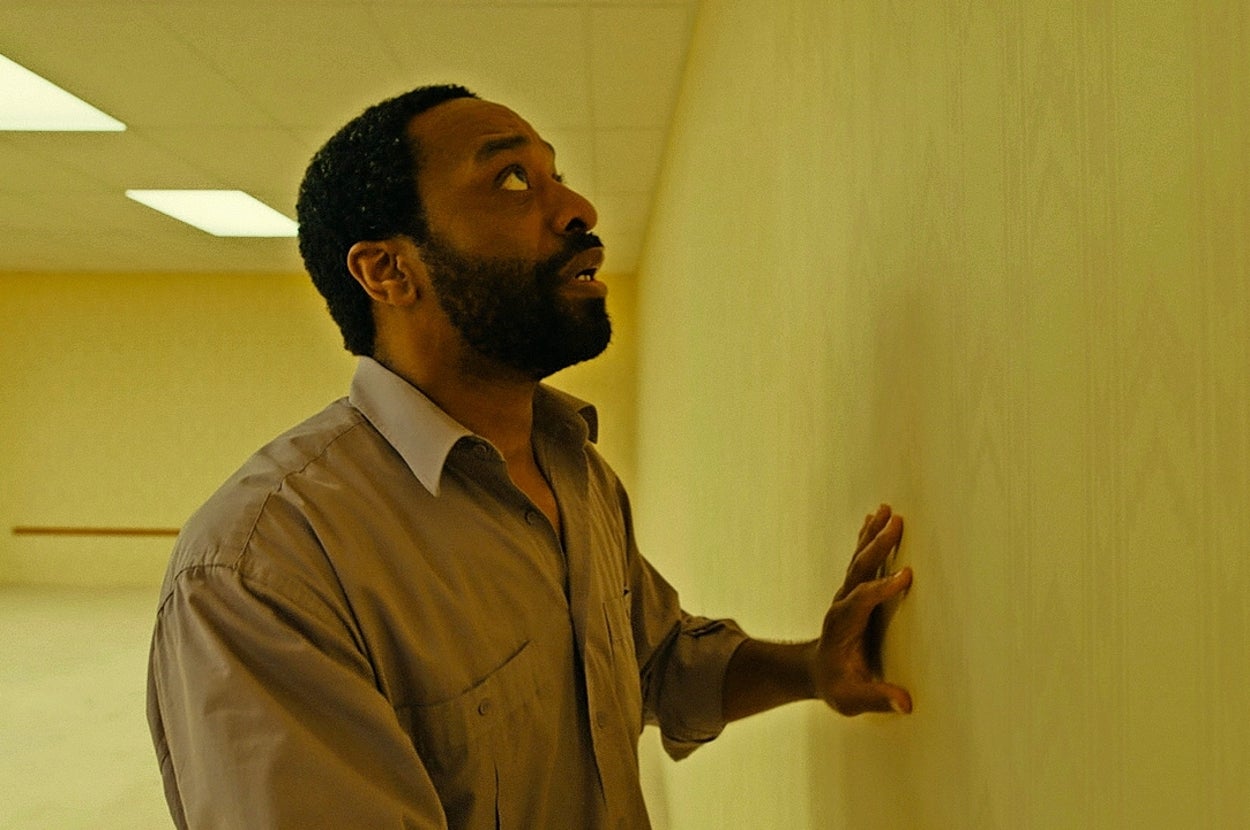
Back in 2019, 4chan members asked fellow users to submit “disquieting images that just feel ‘off’”, with one response featuring an image of an environment similar to the one seen in the film Backrooms, showing a sprawling empty space in the back of a furniture shop.
Shortly afterwards, an anonymous user in the same thread submitted a potential origin story for the space, which read:
“If you’re not careful and you noclip out of reality in the wrong areas, you’ll end up in the Backrooms, where it’s nothing but the stink of old moist carpet, the madness of mono-yellow, the endless background noise of fluorescent lights at maximum hum-buzz, and approximately six hundred million square miles of randomly segmented empty rooms to be trapped in.
“God save you if you hear something wandering around nearby, because it sure as hell has heard you.”
The photo and accompanying text then became widely shared across message boards like 4chan and Reddit, becoming its own “creepypasta” (a term that basically refers to a viral meme that’s more scary than funny).
People then began putting their own spin on the concept of the “backrooms”, with Kane Parsons starting a hugely successful YouTube series created using the design software Blender, which is how he caught the eye of production company A24.
One other key adaptation of the “backrooms” trend came in 2024, when an episode of the stand-alone anthology series American Horror Stories brought the concept to the small screen.