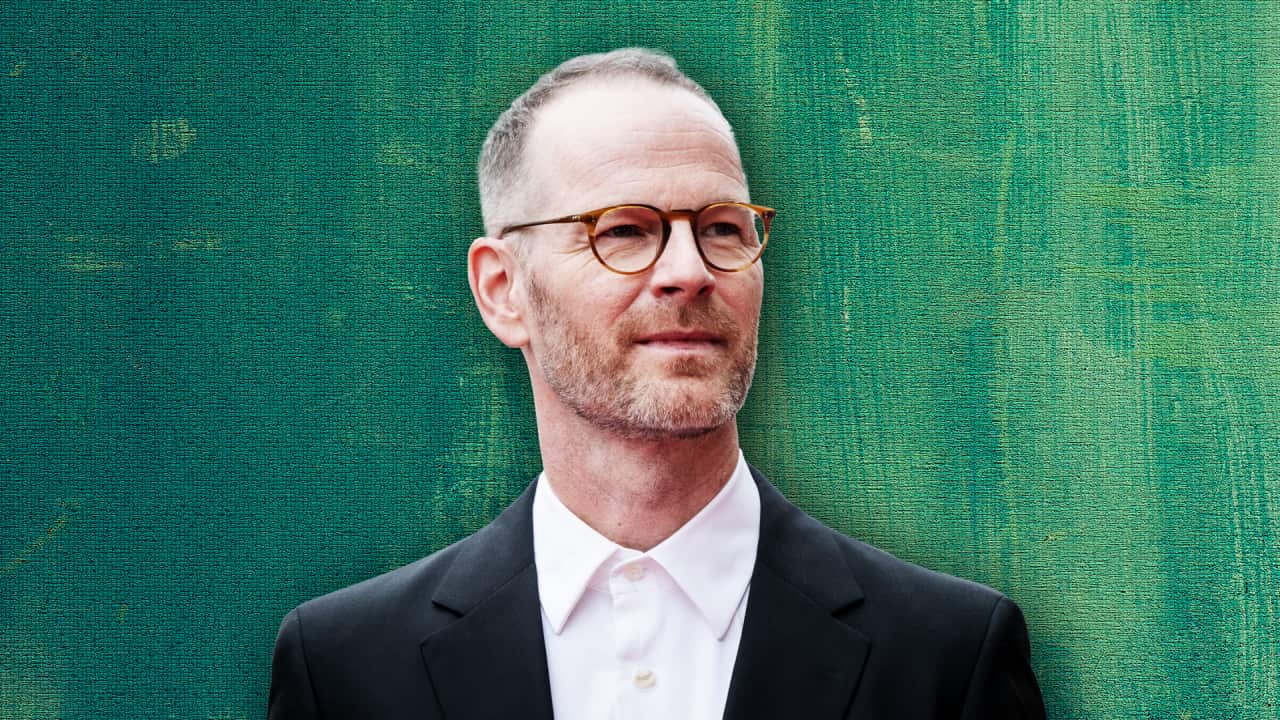
Sentimental Value director’s punk path to the Oscars
Long before he was nominated for an Academy Award, Joachim Trier was drawing Xs on his hands in underground punk venues and smuggling skateboards across the Swedish border into Norway.
In the 1980s, Norway banned skateboards, labelling them “dangerous toys”. So Trier and his friends would drive to Sweden, buy them, and bring them back illegally.
Around the same time, he was immersed in the punk and hardcore scene, entering the world of ‘straight edge’ — a subculture whose adherents didn’t drink alcohol, smoke, or use recreational drugs and could often be identified by hand-drawn Xs on their hands.
More than 35 years later, Trier’s eyes still light up when he speaks about it.
“It was the punk and hardcore [scene] in the 80s where people didn’t drink,” he tells SBS News.
“You had an X on your hand. The people that went to the bar and had an X were underage and couldn’t buy alcohol — but then everyone put Xs on,” Trier says.
Their ethos? Presence over excess.
“We’re not drinking. We’re in it in a different way. We’re mentally present,” he says.
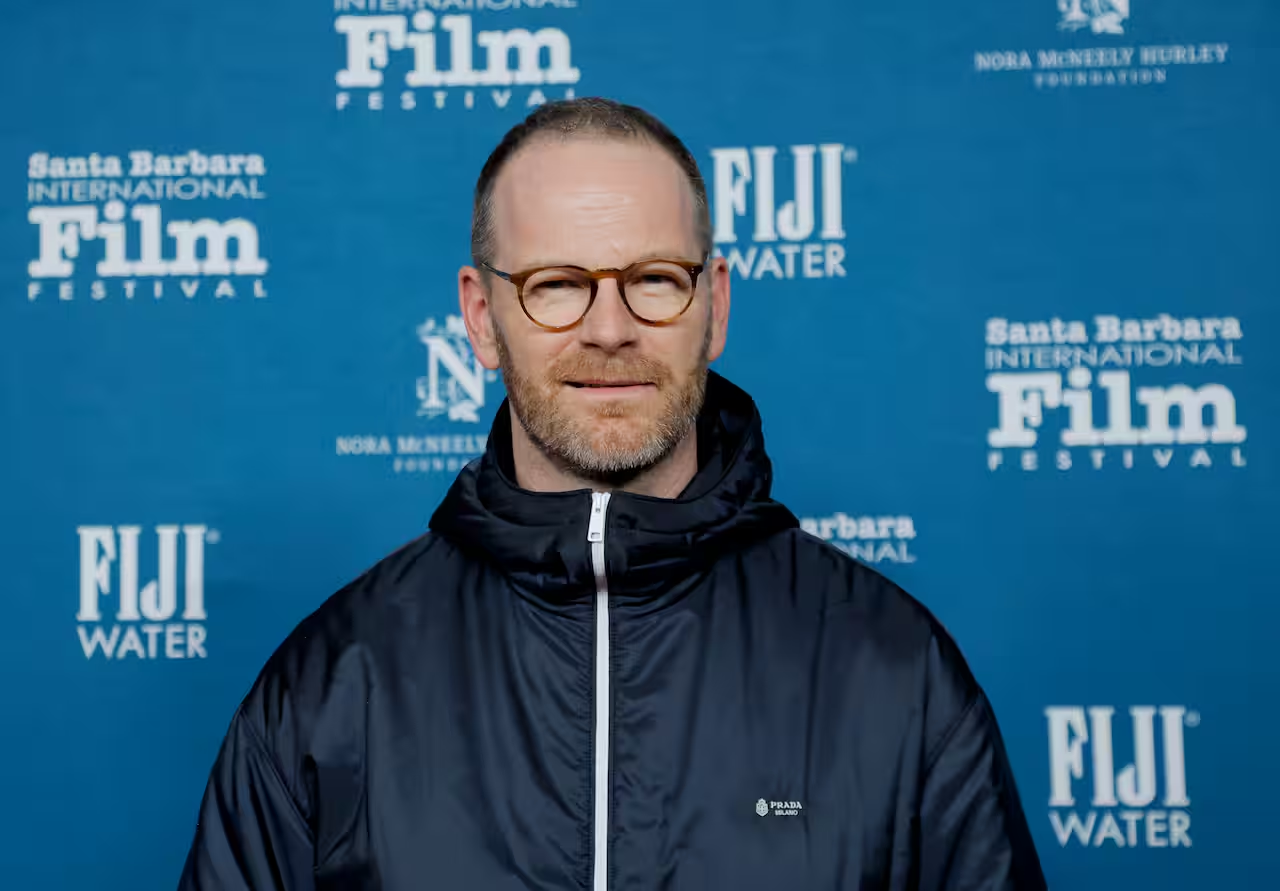
While the 52-year-old director and writer is now more commonly seen wearing button-ups and suits, that anti-authoritarian and alternative culture still flows through him — and his filmmaking.
“I feel it gave me a different strength — different types of expectations and focus,” he says.
“We knew there were just a few people around the world, but we were many that understood it.
“Most people in my [school] class maybe didn’t get it, but my skater friends did. It gave you this feeling that it’s okay to do culture that’s not mainstream, where everyone has to like it, and it’s still valuable and it could be different.”
That gives me comfort and strength to try to be subjective and that’s my approach to making movies.
His first films were skate videos. For a brief period, he was even a two-time Norwegian skateboarding champion.
Today, he’s best known for The Worst Person in the World and his latest film Sentimental Value, starring Stellan Skarsgård, Renate Reinsve, Inga Ibsdotter Lilleaas and Elle Fanning.
The film, released late last year, has earned nine Oscar nominations, including a best director nod for Trier, and has won a Golden Globe, a BAFTA, six European Film Awards and the Cannes Grand Prix.
Despite the accolades, Trier is more comfortable operating a little off kilter.
“When everyone’s, ‘Oh my God, not everyone shows up to the big blockbusters,’ I’m like, ‘Yeah, well, we’ll keep doing our thing over here anyway, if we are allowed to,'” he says.
‘Stuff that’s hard to talk about’
Trier’s previous films — particularly the Oslo Trilogy, consisting of Reprise (2006), Oslo, August 31st (2011) and The Worst Person in the World (2021) — examine people quietly coming undone under the weight of expectation, wrestling with who they thought they would be.
But Sentimental Value feels like a more mature excavation: traversing grief, fractured family dynamics, and the complicated inheritance between parents and children.
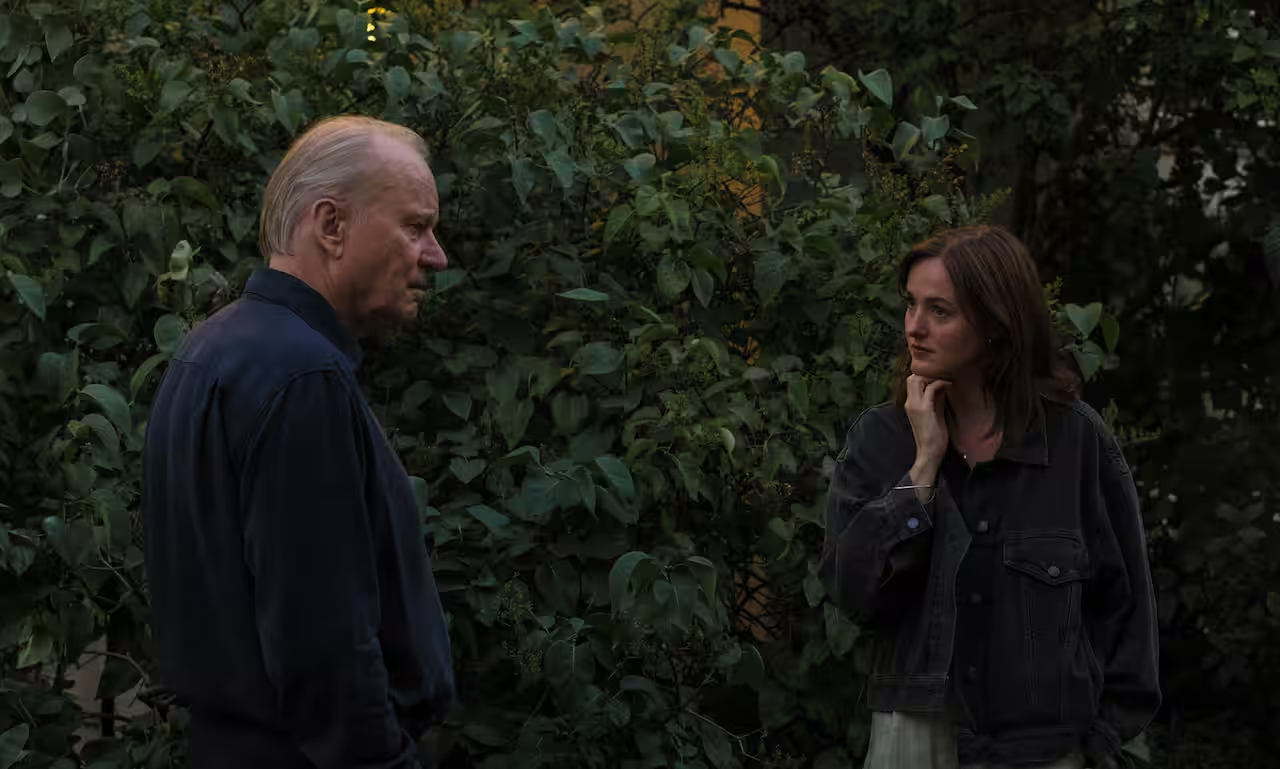
The film follows two sisters (Reinsve and Lilleaas) as they navigate a strained relationship with their father (Skarsgård), a once-celebrated filmmaker who re-enters their lives with a new project.
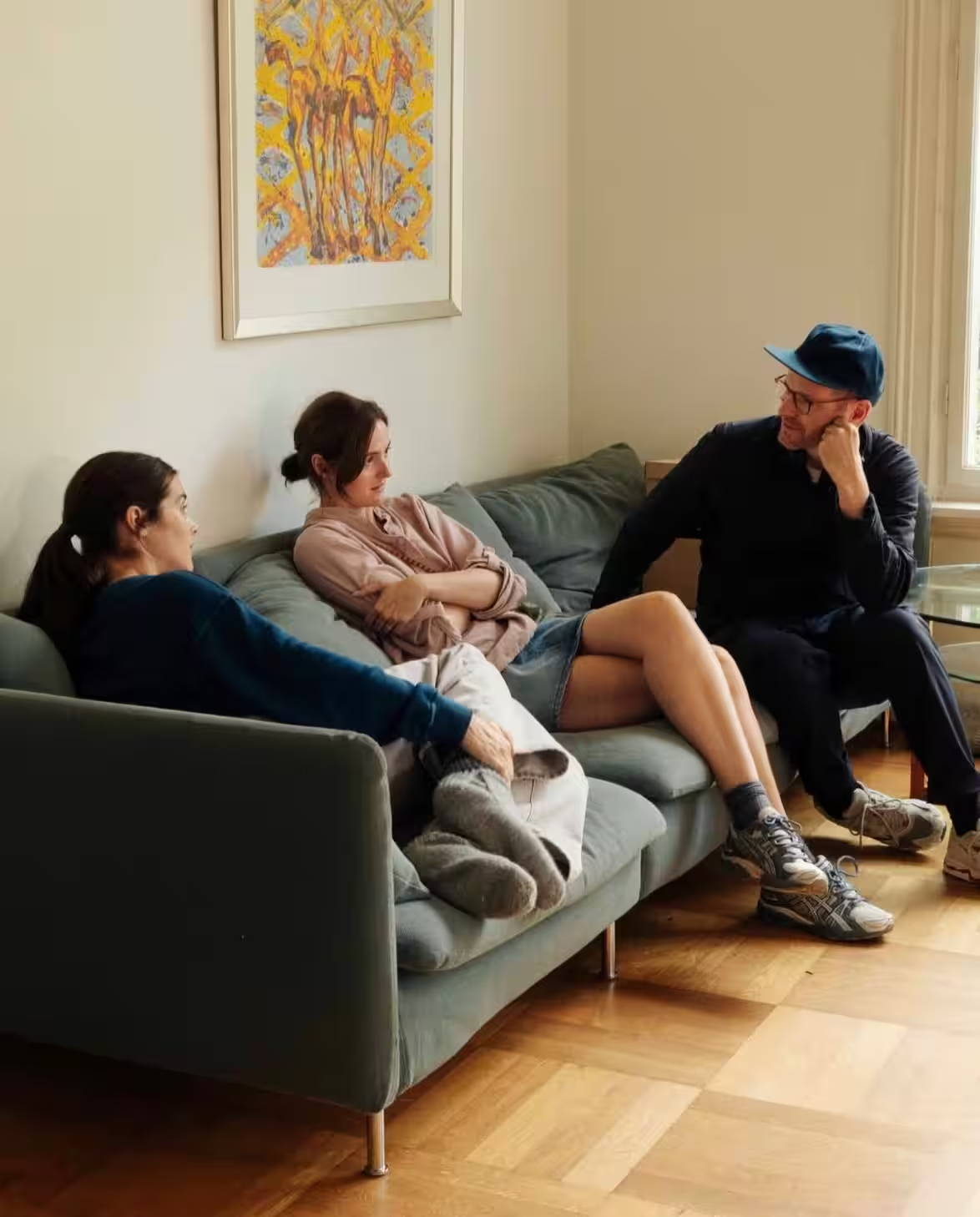
“I wanted it to be about stuff that’s hard to talk about,” he says.
“The disappointment many people feel in their parents and how to try to reconcile that, what we feel we didn’t get.”
“But also the responsibility you have as a grown-up to try to see your parents in the light that they were also children once. They’re also human beings.”
True to form, Trier resists easy catharsis or tying up endings in a satisfying little bow.
“I didn’t want to have it sell out — that in the end they talk about it and forgive each other and it’s all okay — because that’s not how it works … There are a lot of films and stories that are neatly tied up. I find that sometimes problematic,” he says.
I don’t think it mirrors life because things are messy and imperfect. It’s kind of more comforting and more cathartic to try to achieve a feeling of some sense of truthfulness.
For Trier, films are better when they’re a little ambiguous.
“The ideal is that through this weird mixture that films have between identification and empathy and mystery and distance, that interplay in watching a movie, that there’s enough space for the audience ideally to start thinking about themselves, their own lives, their old relationships, that it becomes a thematic discourse with whoever’s watching it.
“If the ending then tells you everything, and then you can end up stealing the opportunity for someone to walk out of it with their own subjective experience.”
The lives we didn’t live
In the years since its release, The Worst Person in the World has taken on a second life online, particularly for gen Z and millennial women.
Film essays, TikTok edits and think pieces continue to dissect its portrayal of modern womanhood. Even pop star Charli XCX declared a ‘Joachim Trier Summer’ during her 2025 Coachella set, later introducing Sentimental Value at the Oslo Pix Film Festival.
Trier finds that kind of afterlife quietly surreal.
“Several of these films have picked up some life after they were in the flash of the moment in cinemas, but they actually still live out there … it’s what I dreamt of — like an old album that you can still play even though the band has made a new one. That’s my dream.”
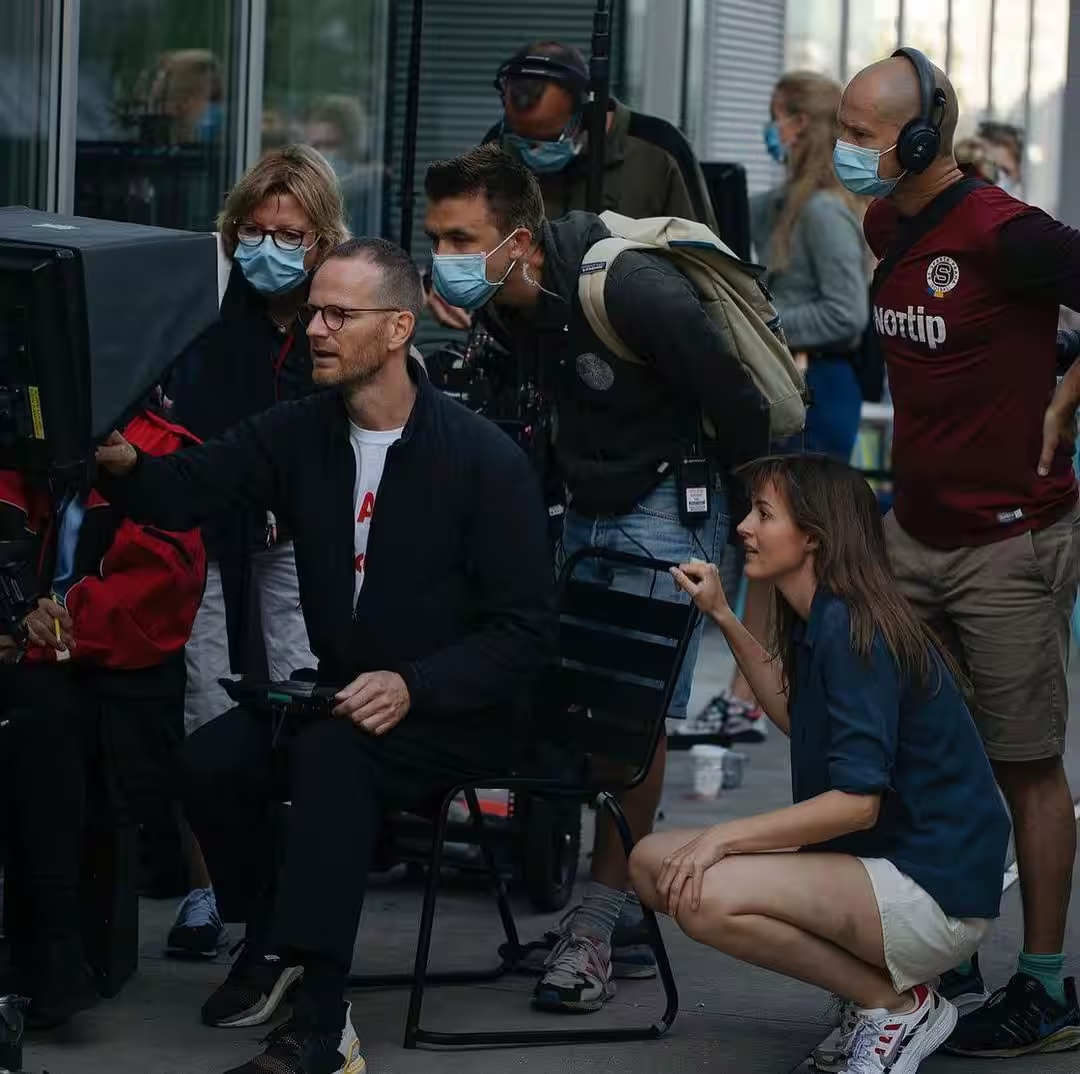
At the heart of many of his films is a preoccupation with the paths not taken in life — and the grief that lingers around these unrealised futures.
“So much of your life is those ideas of who you are and those things you might want to do that never happen,” he says.
“There’s grief involved in the paths we didn’t take, or the loss of people who are not around when we are in those structures.”
He has been criticised, he acknowledges, for focusing on relatively privileged, middle-class characters. But the struggles he’s drawn to are internal.
He’s been criticised, he acknowledges, for focusing on relatively privileged, middle-class characters, but he says that these characters’ internal struggles are faced by a wide range of people.
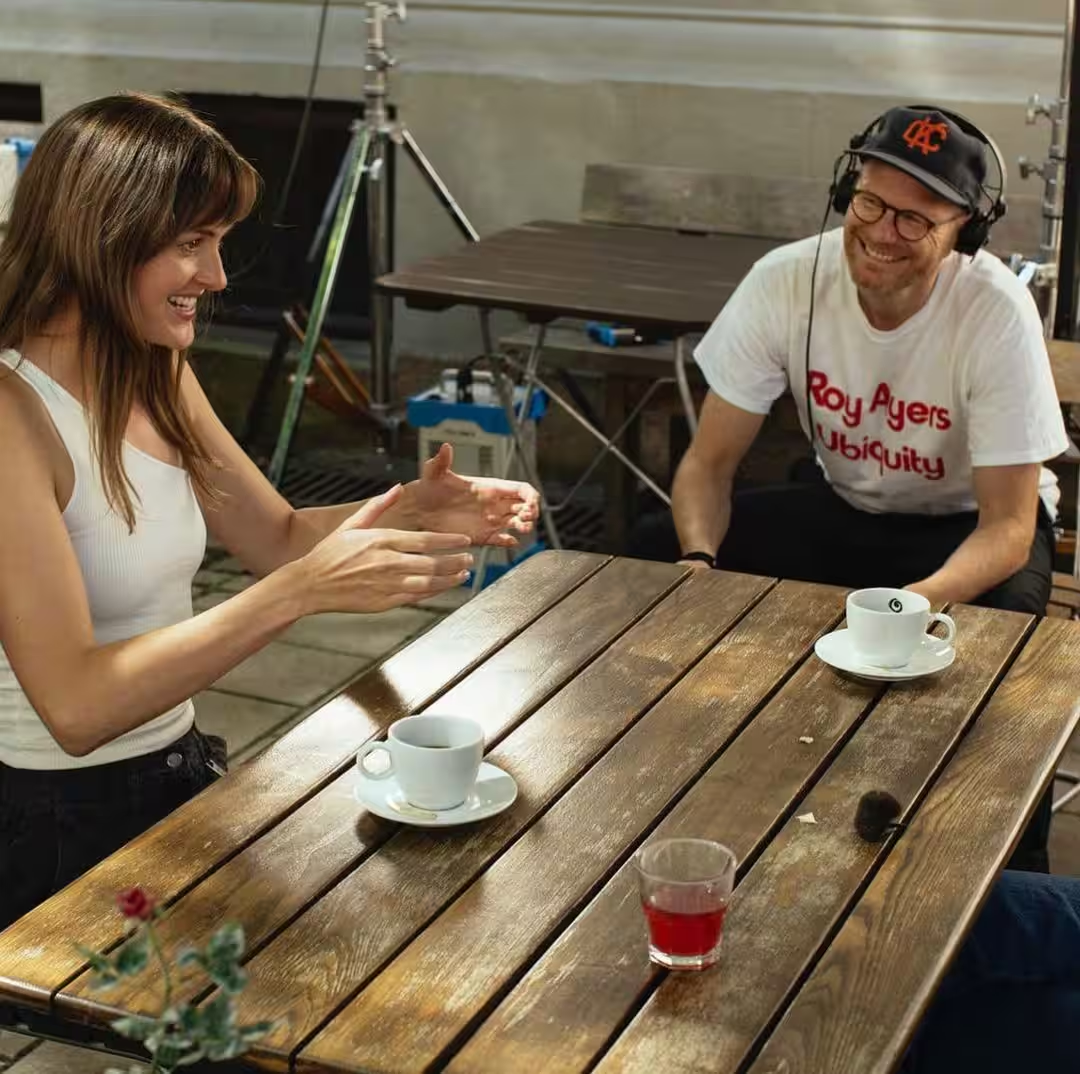
“People have really fallen apart from the possibility of the double shame of not living up to the potential of your life.
“People aren’t managing to fulfil what they feel is their potential or live up to the expectations of family and peers and surroundings and all that stuff.
“Depression, addiction, suicide — I’ve unfortunately seen some of that in my life and I find that those struggles, the internal struggles, [are] what I try to make movies about most of the time. And it’s not a big plan. It just happens.”
In this way, Trier likes the idea that his films could hold a mirror up to people and make them feel less alone.
“I’ve been soothed by books and music and movies. If you’re heartbroken and you understand you’re not the only person in the world experiencing that through a sad love song, maybe that’s okay. So yeah, I like that idea. If I could do that, I would be very happy.”
What life is really about
When Trier thinks about his own life and path, it’s with a deep tenderness.
Sentimental Value is the first film he’s written since he became the father to two daughters — a “weird life imitates art thing”, he says, given the film also centres on two sisters — which has fundamentally changed the way he now approaches his craft.
“I had to take that difficult father character seriously,” he says.
The only sane approach to being a parent is to try to be forgiving to yourself — that you’re doing your best.
“You’re like, they shouldn’t watch too much TV, and then one day you put them in front of the TV just because you have to go and clean the house. It’s messy. It’s life.”
Having to hold that messiness in mind while writing about an imperfect family changed the way he approached writing the film.
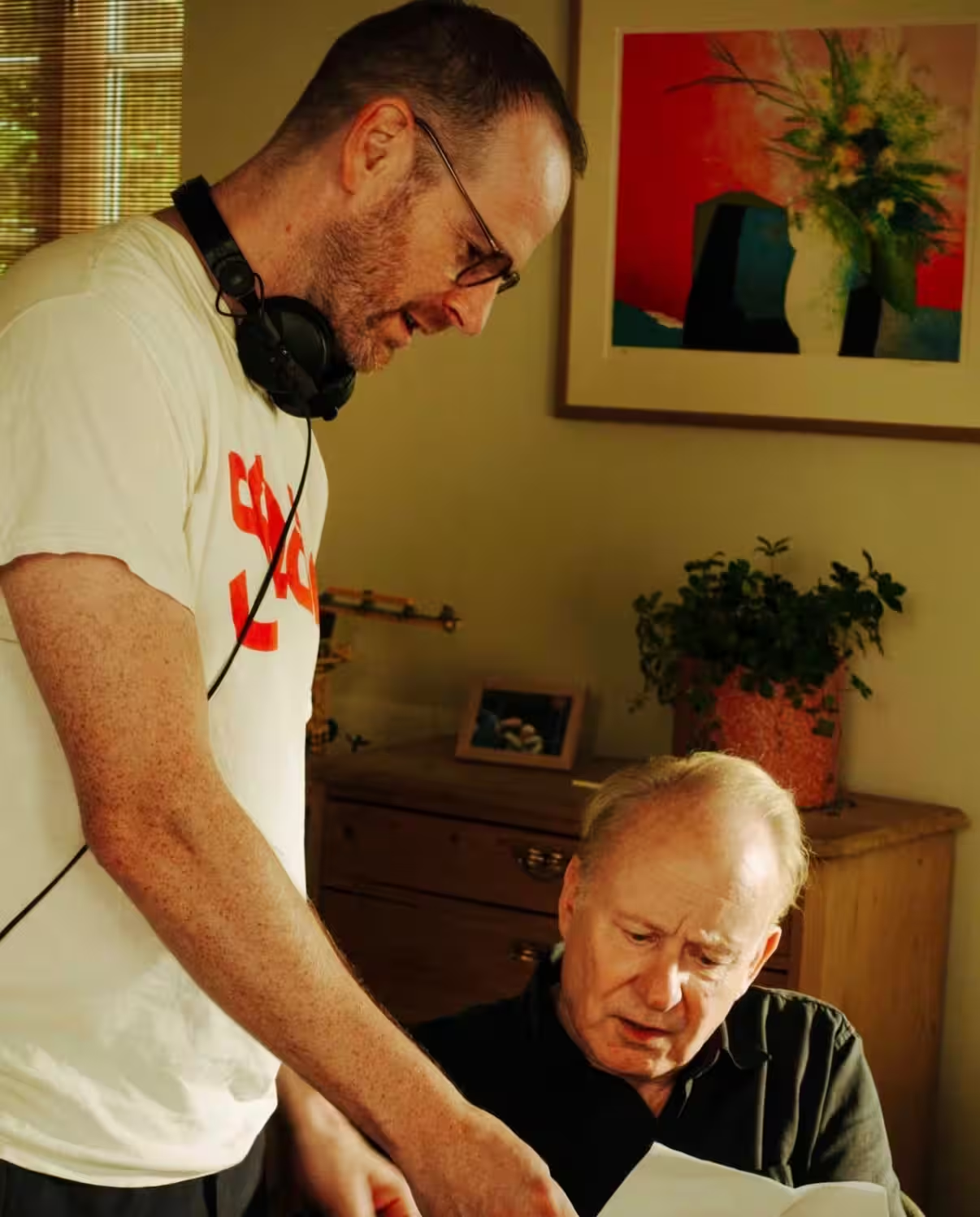
“I had to try and identify with all of them,” he says.
Known for his carefully chosen needle drops, Trier has previously described himself as a “music geek” and “vinyl freak” and, when asked to choose a song that reflects his life right now, he opts for 1970s jazz poet Gil Scott-Heron’s Your Daddy Loves You.
“I play it around the house and feel gratitude for having two young daughters at the moment,” Trier says.
“I’m really appreciating all the attention and all the people who want to talk to us and show the film …. But I’m actually right now kind of longing to just spend more silent times with my kids.”
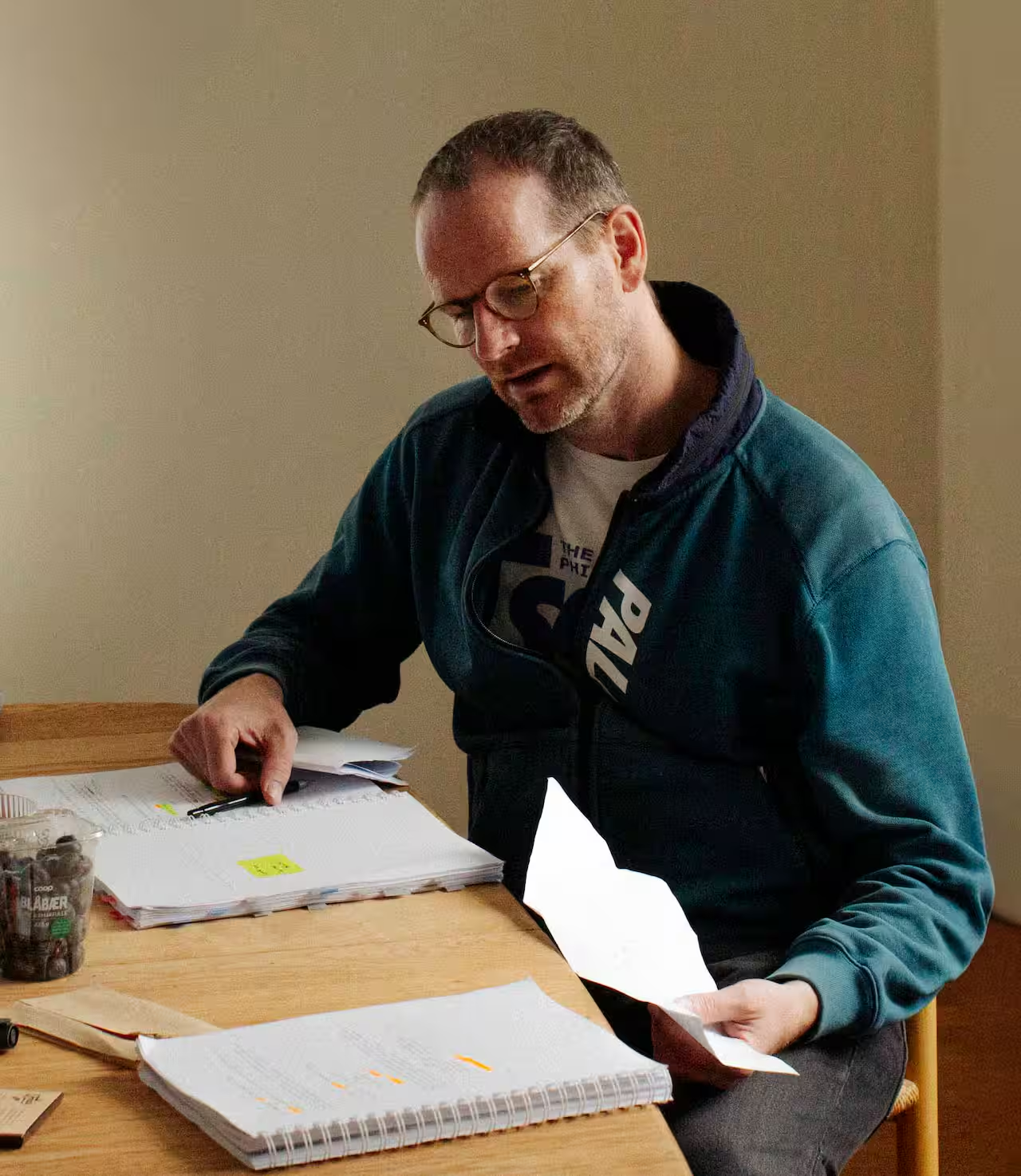
Despite the glamour of awards season, he says it’s the quieter phases of life that sustain him.
“I’m going to be back writing soon. I look forward to that process because those writing bits in my life are often the time when I have time to be more with friends and family. I go and do the kindergarten pick-up. I have evenings off. I can watch more movies. I like those phases of my life a lot.
“Call me cheesy, but that’s what my life is about at the moment. And I’m not ashamed of it.”
For the latest from SBS News, download our app and subscribe to our newsletter.