
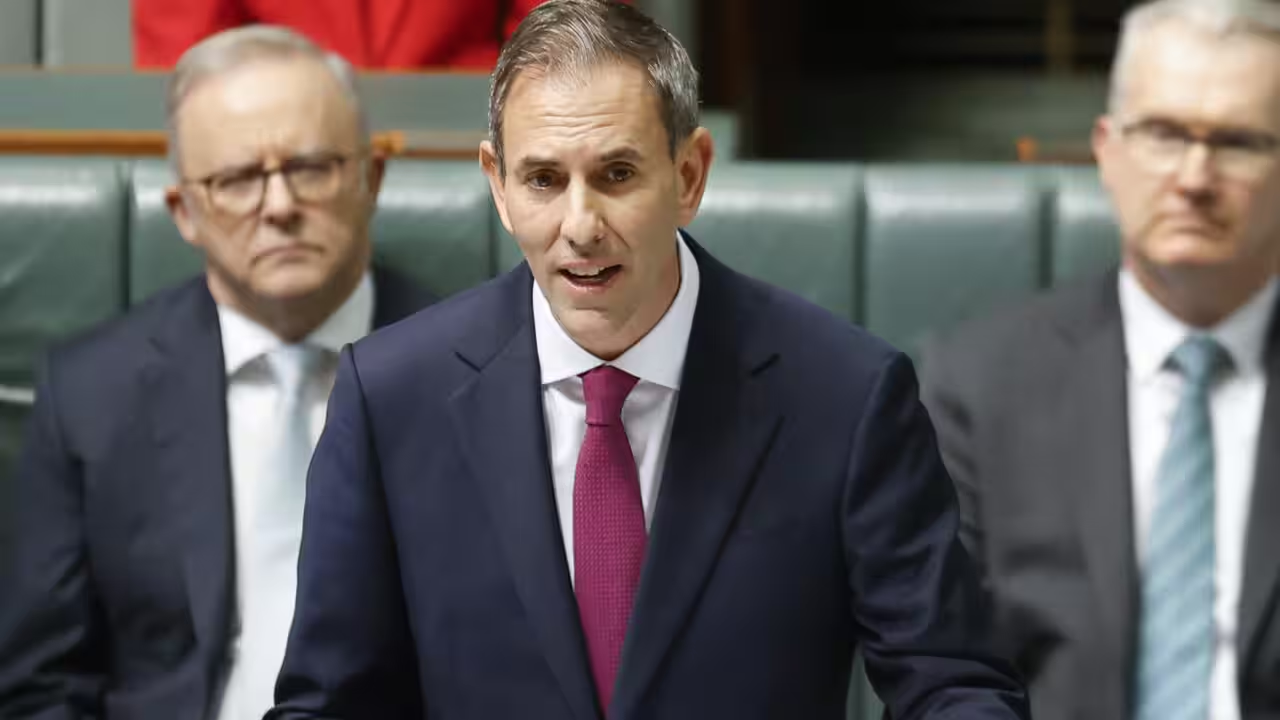
Federal budget 2026: Live updates and coverage

Small business owners, first home buyers, migrants and travellers are just some of the Australians impacted by the 2026-27 federal budget.
Winners include taxpayers, small businesses and older Australians, while travellers, foreign investors, trust recipients, property investors and the economy will face more difficult conditions.
Winners
Working Australians will get a new $250 Working Australians Tax Offset (WATO), effective from 1 July 2027, on top of the $1,000 instant tax deductions that Australians can claim, without producing receipts, coming into effect in this year’s tax return.
For small businesses, the budget will reintroduce a loss carry-back scheme, allowing small businesses to invest in their operations and claim a tax refund if they consequently run at a loss during the prior two income years.
For older Australians, there will be an additional 5,000 aged care beds created as part of a $3.7 billion aged care package.
Migrant tradies will benefit from rules allowing an additional 4,000 trade workers to enter the workforce each year, as the government accelerates skill assessments and occupational licences in a move that’s expected to reduce the time taken to enter the workforce by at least six months.
Losers
The economy: the government’s updated gross domestic product forecasts are down for the next three years, expecting slower growth. Chalmers partially attributed the slower growth rate to price pressures resulting from the war in the Middle East.
Foreign investors will face an extended ban on buying Australian homes, with the government saying the measure is aimed at supporting housing supply for residents. The ban will now remain in effect until 30 June 2029.
Property investors will have to navigate highly-anticipated changes to capital gains tax (CGT) and negative gearing tax breaks. Under the new system, negative gearing will be limited to new builds, and the previous CGT discount will be replaced with a discount based on total profits minus inflation.
Trust recipients will pay a minimum 30 per cent on capital gains from trusts from 1 July 2028, in a move that attempts to address tax rate differences that arise when trusts are spread across multiple beneficiaries.
There will also be changes to the permanent migration points test, which affects two-thirds of migrants, with the government prioritising younger and more educated workers.
Read more here:
— Ewa Staszewska, Josie Harvey