What’s in the 2026 budget for Aboriginal and Torres Strait Islander people?
Despite $1.2 billion announced for Closing the Gap measures, First Nations organisations have criticised the federal government’s budget as a “missed opportunity” to create meaningful change for some of the most vulnerable.
In yesterday’s speech, Treasurer Jim Chalmers said the budget would build an economy that was “stronger, fairer” and gave more Australians “a stake in our success”.
But not all Indigenous experts agree.
What was in the budget specifically for Indigenous people?

Jim Chalmers says his “ambitious budget” delivers for generations to come. (ABC News: Callum Flinn)
This year’s budget allocates $1.2 billion over five years for Closing the Gap initiatives, many of which have already been flagged in the federal government’s February implementation plan.
The commitments include:
- $299 million towards creating 6,000 new jobs by 2030 through the Remote Jobs Economic Development program.
- $27.4 million to reduce the cost of 30 essential grocery items in remote communities and $32.7 million for stores to keep the food fresh.
- $48.3 million for Aboriginal Hostels Limited to provide short-term accommodation services.
- $144.1 million for the infrastructure needs of Aboriginal Community‑Controlled Health Services
- $44.4 million in funding for 10 existing Birthing on Country services.
- $18.9 million over four years for 13YARN, a 24/7 crisis support line for Aboriginal or Torres Strait Islander people.
Loading
Housing changes
The big talking points nationally are the changes to the capital gains tax discount and negative gearing for investors in the rental market.
These combined measures are estimated to raise $3.6 billion over five years from 2025–26 and create the potential for 75,000 Australians to buy their own home over the next decade.
Loading
For renters, the government expects increases of $2 a week, which will impact more than half of all Indigenous households.
Research indicates 28 per cent of First Nations households owned their own home with a mortgage, and just 14 per cent owned it outright.
Shaun Middlebrook wants to see more investment in First Nations housing and homeless services. (ABC: Nathan O’Brien)
Shaun Middlebrook, First Nations principal advisor at the Australian Housing and Urban Research Institute, said these changes were unlikely to have a positive impact for First Nations people.
“There’s already barriers for First Nations community access in the private rental market due to discrimination, [and it is] … a really unaffordable sector,” he said.
“I think we’re potentially going to see over the coming months, potentially years … an increase in the rental pricing, and we’re just going to be continually priced out of the private market.”
The budget allocated $6.3 million over three years to fund a national First Nations housing peak body.
“I applaud the government for providing the funding,” he said.
“But I still think largely it falls short of what’s actually required in a First Nations community space to support home ownership [and] to support the private rental market.”
The government will continue to fund projects such as the Housing Australia Future Fund, established in 2024 to provide repairs, maintenance and improvements to remote Indigenous housing in the Northern Territory, Queensland, South Australia and Western Australia.
Indigenous people on the NDIS

Damian Griffis says Indigenous people are underrepresented in NDIS. (Supplied: Disability Royal Commission)
The government also announced cost-saving measures to bring down the ballooning National Disability Insurance Scheme that will see more than 160,000 participants moved onto state-run support programs by 2030.
Damian Griffis, CEO of the First Peoples Disability Network, said the budget provided “no detail” when it came to Indigenous people with disability, who were “anxious” about whether their needs would be met.
“There’s just not enough deep thinking. There’s not enough consultation with experts, particularly First Nations people with disability themselves, who are, after all, the experts in their own lives,” he said.

The federal government is looking to reduce the spend on the NDIS. (ABC News)
More than 8 per cent of NDIS participants — or 60,529 — are Indigenous people, primarily in the system because they live with intellectual disability and autism.
Mr Griffis, a Worimi man, said measures to clamp down on fraud and criminal behaviour were also needed for the NDIS.
“There has been too much of that happening and it has been targeting our communities, particularly in remote Australia,” he said.
Stolen Generations recognised in budget
Steve Larkin welcomes the budget announcement but says more reform is needed for survivors to age with dignity. (ABC News: Daniel Taylor)
The government announced yesterday that Stolen Generation survivors who had received redress payments and lived in aged care homes would now have their compensation excluded from the means testing used to determine the cost of services.
$3.2 million over four years has been committed to exempt Stolen Generations Redress Scheme payments from inclusion in residential aged care asset testing.
It is a move that the Healing Foundation, the peak body for Stolen Generation survivors, has long been fighting for.
Healing Foundation chair Steve Larkin said the decision to exempt redress payments from means testing was “welcome but overdue”.
“Survivors can age knowing that their redress won’t be used against them when they need care most. It removes just one more burden from their lives, [which are] already shaped by trauma, disadvantage and systemic failure,” Professor Larkin said.
However, there are concerns that the government has acknowledged one cohort and left another vulnerable.
Professor Larkin said most First Nations people preferred to receive aged care services at home to avoid being re-traumatised in a facility.
“They’re still going to be asked to pay for essential in-home supports … that includes cooking, cleaning, laundry and transport,” he said.
“They’re not optional extras, they’re fundamental in underpinning health, independence and social connection.
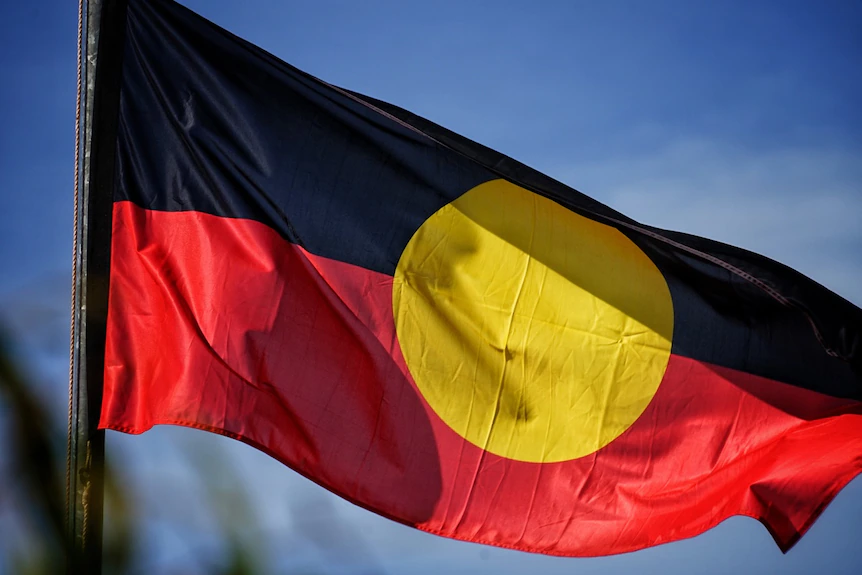
The Bringing Them Home report found forced removals had lifelong impacts on Stolen Generations survivors and their families. (ABC: Mitchell Woolnough)
National Aboriginal and Torres Strait Islander Ageing and Aged Care Council (NATSIAACC) said while the budget demonstrated a commitment to closing the gap, it also believed further reform was necessary.
“There were missed opportunities around dedicated investment into culturally safe care, stronger support for Aboriginal Community Controlled Aged Care providers, and extending these protections across Support at Home arrangements as well,” CEO Kim Whitely said.
The budget announcements come just weeks out from National Sorry Day, which recognises the anniversary of the Bringing Them Home report detailing the harm caused by government policies that removed Indigenous children from their families.
“Stolen Generation survivors already carry the lifelong impacts of forced removal, and as we move forward and hopefully work with governments to make it better, it must never deepen that harm,” Professor Larkin said.
Early childhood funding calls
As part of the $113 million for First Nations education commitments in this year’s budget, the Clontarf Foundation will receive an additional $55.5 million for the 2027-28 financial year, and $30 million has been allocated for the Australian Indigenous Education Foundation’s Indigenous scholarships program.
Catherine Liddle is urging the government to back Indigenous early childhood initiatives in order to close the gap. (ABC News: Xavier Martin)
But Catherine Liddle, CEO of SNAICC, the peak body representing Aboriginal children, said the budget did not go far enough in funding programs to support parents and their children from birth to early childhood.
Ms Liddle raised concerns about funding security for the Early Years Support program, which ensured childhood education and services were designed by Aboriginal communities.
“That’s really critical because children who start their learning journeys with a gap can expect that gap to get bigger and bigger,” she said.
“The impact of missed opportunities is going to be felt by families. That’s a no-brainer. Until we start investing, we’re going to continue to see children and families slip through the gap.”
According to the latest Closing the Gap data, only a third of Aboriginal and Torres Strait Islander children starting school were developmentally on track, which was a drop from the baseline year.
All levels of government and the Aboriginal peak body, Coalition of Peaks, have committed to 19 targets to close the social and health gap between Indigenous Australians and non-Indigenous Australians.
Four of those targets are on track to meet their deadline in 2031.
Ms Liddle said although the budget “missed the mark”, there were “bright spots”, including increased funding for Family and Children Activity, which works to support vulnerable children and address domestic violence against Indigenous women and children.
The government has also announced $218.3 million to support the delivery of Our Ways — Strong Ways — Our Voices, Australia’s first standalone plan to end violence against Aboriginal and Torres Strait Islander women and children.
Legal body responds to the budget
The National Aboriginal and Torres Strait Islander Legal Services (NATSILS) said First Nations people had been “ignored” in the budget, with no new funding announced.
NATSILS chair Nerita Waight said “punitive policies” had led to rising incarceration rates and legal services were being forced to turn clients away due to a lack of funding.
“Aboriginal people are being failed at every step. Our government is failing to provide the services and supports they need to prevent them from entering the so-called justice system in the first place,” Ms Waight said.
“The annual cost of incarcerating an adult exceeds $150,000, and it costs more than $1.2 million to keep a child in detention.
“Those funds are much better spent in preventing people from coming into contact with the criminal legal system in the first place, which will deliver long-term savings and safer communities in the long run.”
Loading…