
‘A massive opportunity’: Global supply shocks spark calls for a rethink on nation’s food security
In brief
- Australia has secured 20 per cent of the urea it needs for this current farming season.
- However, some experts say the country’s reliance on chemical imports leaves it exposed in an increasingly volatile world.
While the government has secured a major fertiliser delivery and the Strait of Hormuz was tentatively opened on Friday, Australia’s food security remains in question.
Since the 28 February US-Israel attack on Iran, which sparked the latest round of war in the Middle East, experts have been warning that fertiliser supply disruptions could result in diminished crop yields, rising food costs, and possible shortages.
“We are a highly productive, efficient, large-scale agriculture-producing country and we produce enough food to feed, apparently, about 90 million people,” Nick Rose, executive director of Sustain: The Australian Food Network, told SBS News.
“But it comes at a very, very significant cost and, in the current crisis, the vulnerabilities of it are being revealed,” the boss of the national sustainable food systems organisation added.
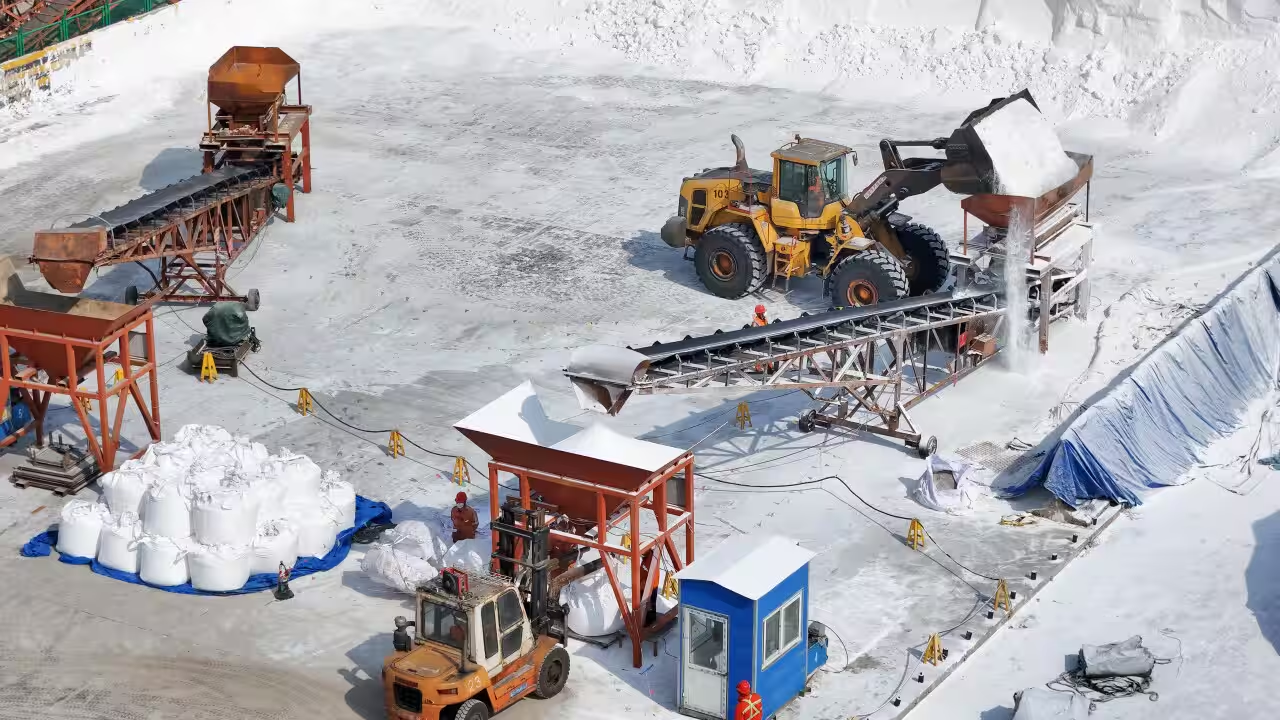
Australia used some 8.7 million tonnes of fertiliser in 2024, with more than 85 per cent of it imported and much of those imports travelling through the Strait of Hormuz.
With the country now experiencing its third major supply chain disruption this decade, some experts are saying now is the time to rethink our food production system.
‘Crunch’ time
Planting for winter crops is currently taking place across most of Australia, with fertiliser needed now to ensure crops reach their maximum potential yields.
The deal facilitated by the Albanese government is for agricultural-grade urea — something Australia imported 3.8 million tonnes of in 2025, and a cheap source of the most essential plant nutrient: nitrogen.
Supplies of fertiliser are typically imported as needed, with the crisis hitting at a particularly challenging time.
According to the government’s figures, the country is still 1.25 million tonnes short of the urea needed for the season, meaning further deals will have to be made if disruption continues.
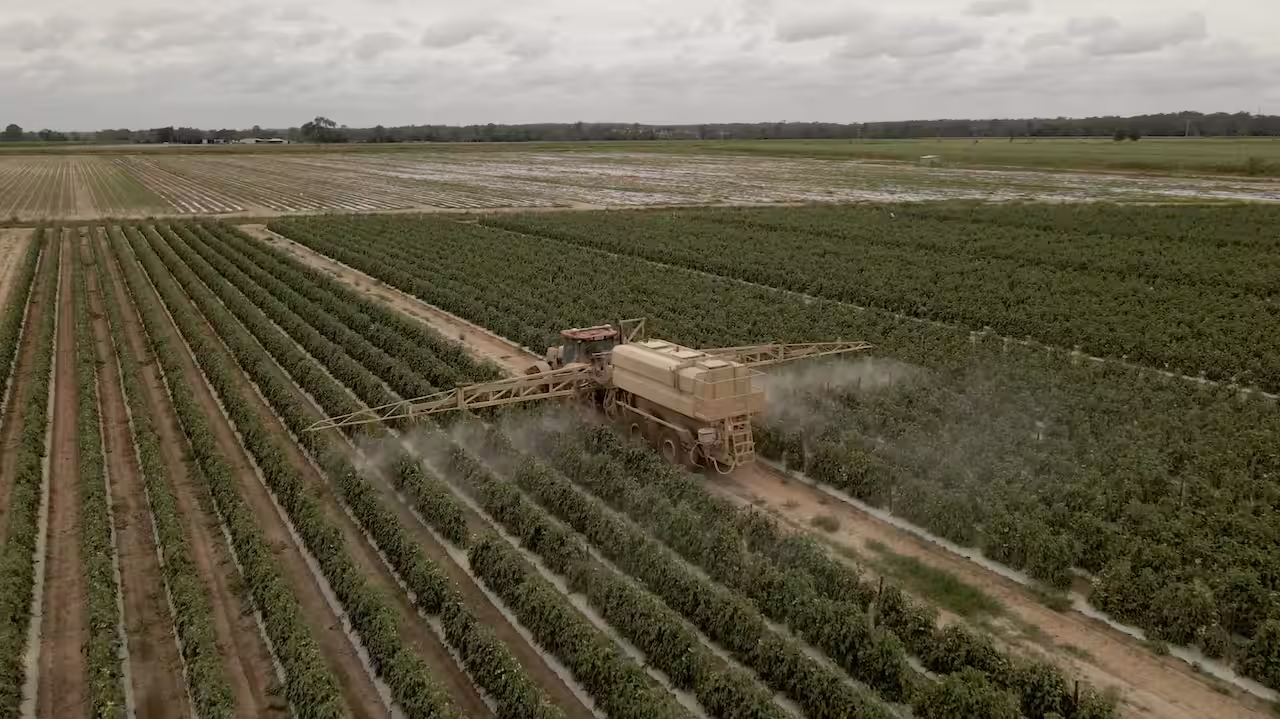
Marit Kragt, professor of agricultural economics at the University of Western Australia, told SBS News that Australia has “all the fertiliser that we need” for now, but added that “our attention is shifting as we need to make sure that June and July are also covered”.
“If those purchases are not filled, that’s when the crunch happens,” she said.
Australia has no domestic means of manufacturing urea after the Gibson Island facility near Brisbane shut down in 2023, with the facility’s owners citing an inability to secure an affordable long-term gas supply as the reason for the closure.
In the past seven weeks, the cost of imported urea has more than doubled — as have the prices of many fertilisers.
During the Russian invasion of Ukraine in 2022, fertiliser prices also climbed, but so too did grain prices, meaning farming profit margins weren’t as threatened as they might have been.
This time, the same is not true.
“The current impacts are much more profound,” Kragt said. “We seem to have not learned anything.”
“We just rely on cheap imports.”
How sustainable is Australian agriculture?
Broader questions are being raised about the overall sustainability of the agricultural system in this country and the need to shift towards more regenerative farming practices.
Fertiliser production relies heavily on natural gas and contributes to the 10-12 per cent of global greenhouse gas emissions that the agricultural industry releases.
The Department of Climate Change, Energy, the Environment, and Water’s 2021 State of the Environment report found that “the condition of Australian soil is generally poor and deteriorating”.
The report — the next edition of which is due in December 2026 — found that 75 per cent of agricultural land in the country shows some sign of degradation.
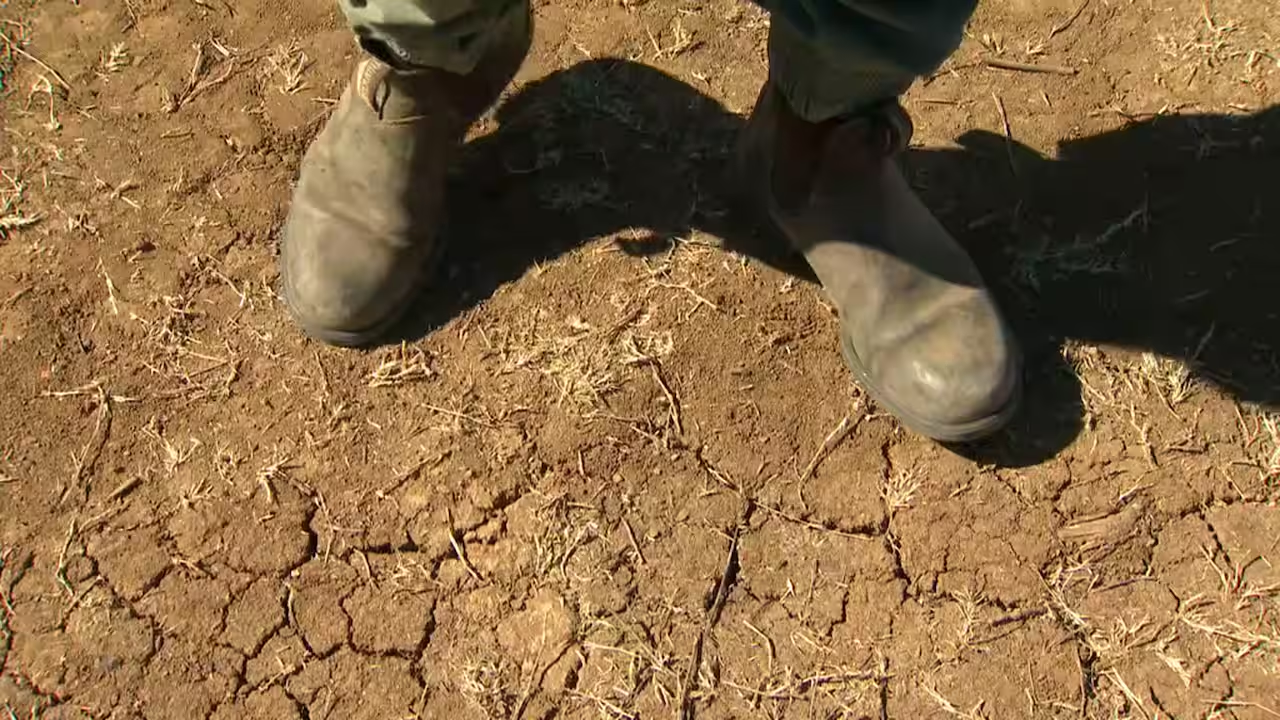
This is partially a result of over-reliance on synthetic fertilisers, which increase crop yield in the short term but can lead to degradation over time.
The issue has drawn the focus of the government, which, in 2021, launched a 20-year National Soil Strategy to ensure and maintain soil integrity.
Kragt said most farmers are “well aware of the need to look after soil” and that practices to improve soil health are now widespread.
That said, she argues much more could be done from an infrastructure perspective to improve the industry’s impact on the planet and that the present moment offers the opportunity to change path.
“You need to invest in new facilities here in Australia, which costs millions, if not billions, and take two years to start producing,” Kragt said.
“Or you could invest in technologies that are already in development or have been developed, and the scaling of those, which could be more sustainable.”
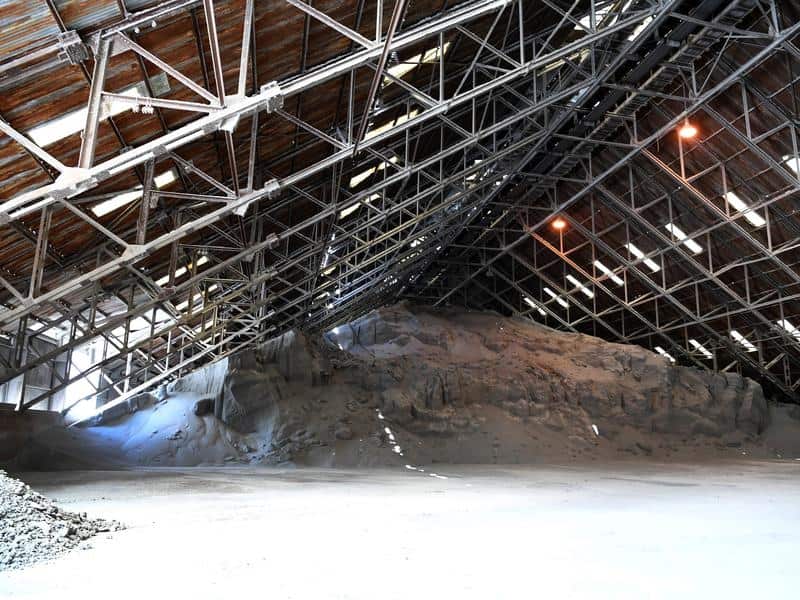
She points to companies like the US-based Nitricity — which produces nitrogen fertiliser using only air, water, solar energy, and almond shells — or the Monash University-based startup Jupiter Ionics, which she said was also innovating in the green ammonia space.
“There are technologies out there; it’s just that the cost and benefits don’t weigh up when imported fertiliser is $700 a tonne.
“Maybe that will be different now that it’s $1,500.”
Food security
The precise impact of the war in the Middle East on Australia’s food security is not yet known, but experts agree that the longer it drags on, the more significant it could become.
The government has already launched a national food supply chain assessment, with an interim report due next week, to understand how the country could better ensure food security.
Agriculture Minister Julie Collins said in March that Australia’s “farmers and producers feed millions of people both here and abroad, but events like the conflict in the Middle East reaffirm why we cannot be complacent”.
“While Australia is food secure, we recognise the importance of supply chain resilience, including the supply of fuel and fertiliser.”
While Australia is a net exporter of food, some experts say this fact obscures the reality of the nation’s food security.
Kimberley Reis, a food resilience and contingency expert at Griffith University, told SBS News that to argue that Australia is food-secure because we are an exporter would be “a mind-numbingly unenlightened thing to say”.
“We’ve got more Australians than ever who are relying on emergency food relief.”
The 2025 Foodbank Hunger Report found that one in five Australian households often skipped meals or went full days without food.
Kragt says rising food prices as a result of the conflict will be virtually guaranteed.
“It’s not going to be 10 or 15 per cent. We’re talking small increases,” she said. “But for some people, that’s substantial, especially because we’ve already seen those increases in the past 12 months.”
Her assessment clashes with that of farmers’ unions, which have warned of 20 per cent increases to food prices.
In addition, food production is not simply about caloric manufacture, as most of our agricultural industry focuses on grains and meat, which are insufficient for a complete diet.
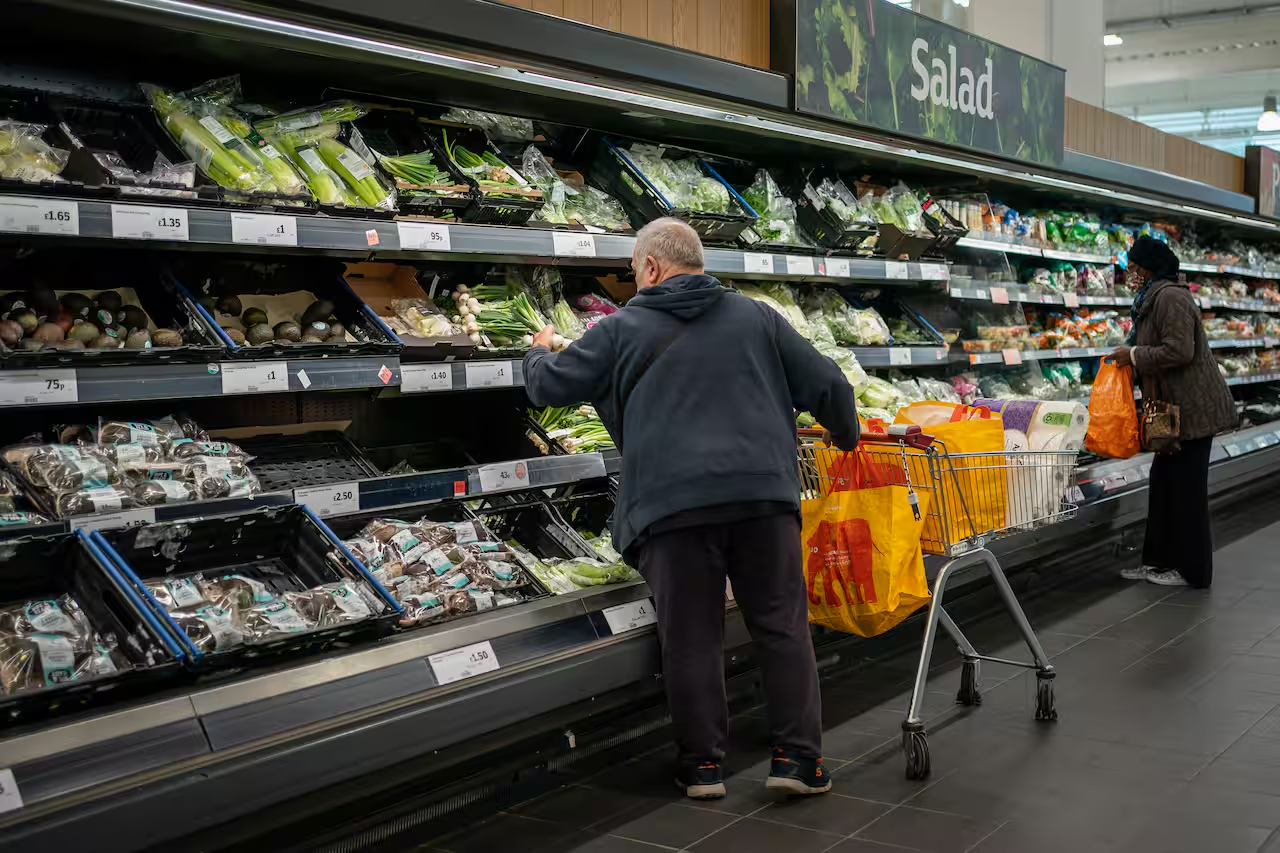
If every Australian followed the recommended five servings of fruit and vegetables per day, Rose said, “we would not now be producing enough veg for the population”.
“That will get worse over time.”
Green shoots for local food self-sufficiency?
Rose argued that the present disruption could serve as an inflection point, forcing the country to reconsider its centralised food delivery system in order to better weather similar — and greater — challenges in the future.
“I absolutely see this as a massive opportunity and a wake-up call for the country on something as fundamental as food,” he said.
Sustain, which advocates for policy change while empowering local communities to become more self-sufficient, has conducted polling into how the war in the Middle East has impacted its members’ behaviours.
“We’ve had over 400 responses, and over a fifth, about 22 per cent of people are saying that they are growing more food at home,” Rose said.
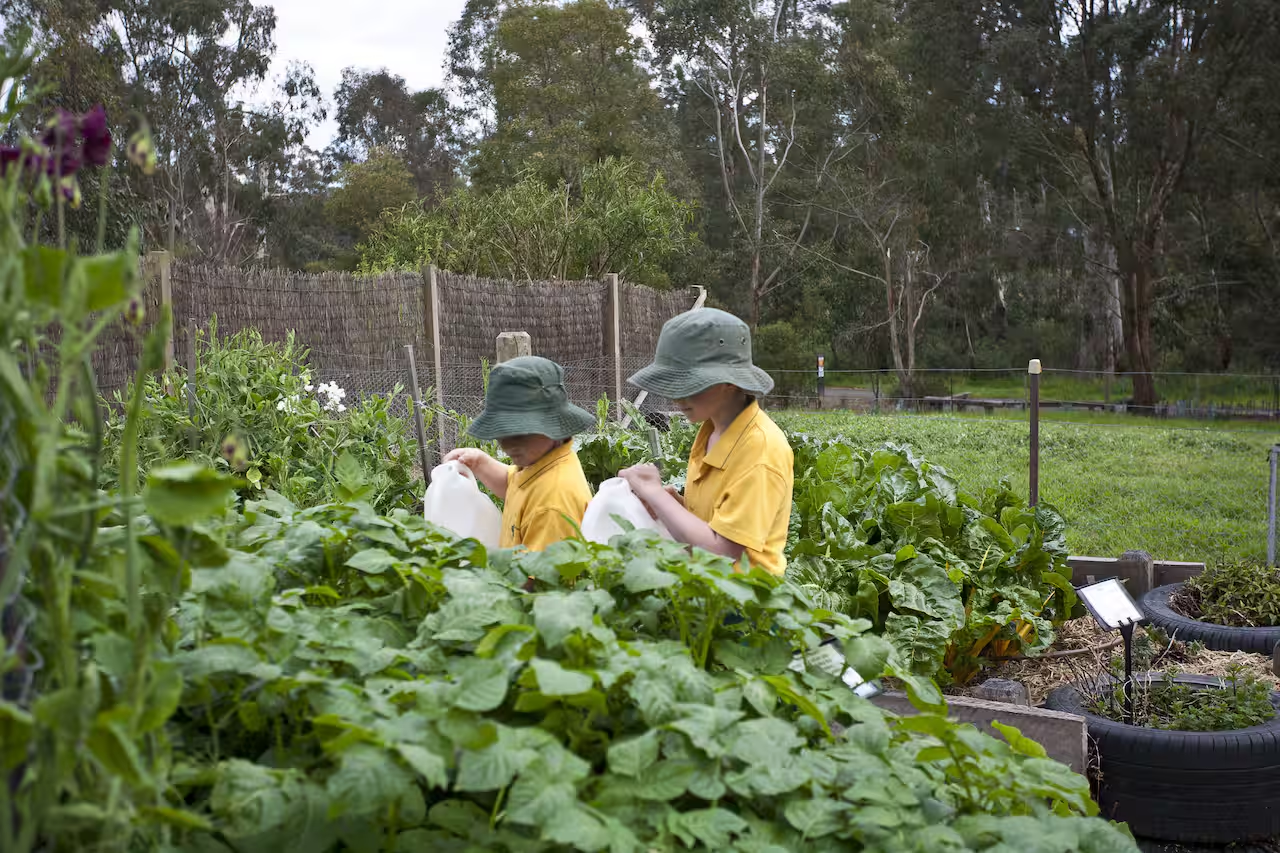
Reis argued that the potential for food disruptions should serve as a reminder that international supply chains are increasingly unreliable in a destabilising world.
“It’s really important that communities come to understand that [the current system is] not sustainable,” she said.
Food supply chains that are more regional rather than global are also more likely to use “more ecologically supportive farming practices,” she said.
She argues that communities organised around such local food supply structures are better able to “bounce back and reshape themselves in a more sustainable way” following significant disruptions.
“It’s been very encouraging for me to see that over the last five years or more,” she added.
For the latest from SBS News, download our app and subscribe to our newsletter.