
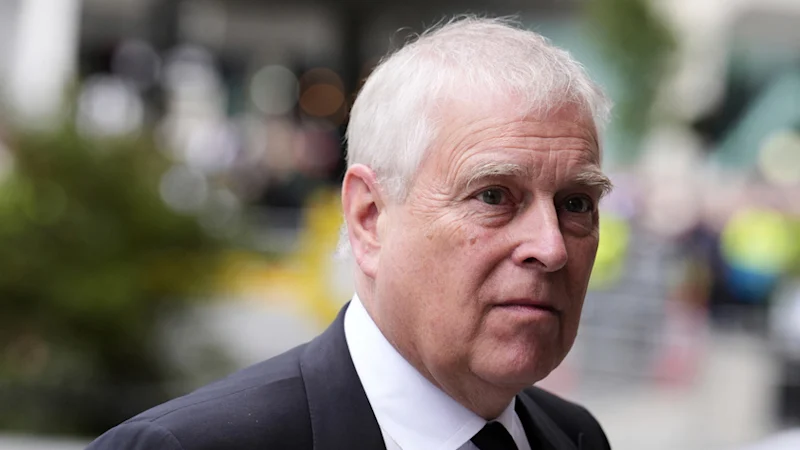
Andrew Mountbatten-Windsor: Judge rules police search warrants were unlawful for former prince in arrest over Jeffrey Epstein links

A British judge has ruled in favour of Andrew Mountbatten-Windsor in a dispute over police searches of his homes earlier this year when they arrested the former prince on suspicion of misconduct due to his ties to sex offender Jeffrey Epstein.
The decision is a significant victory for the former prince nine months after his arrest made global headlines, and it raises questions over the evidenced gathered and whether he may ever be charged.
The judge said on Thursday in London – about 12.30am on Friday AEST – that the Thames Valley Police had relied on the wrong law when seeking approval from the courts for the search warrants days before the raids in February.
The police are seeking to ensure they can keep the evidence they gathered on the day in order to support their investigation, arguing that they are still pursuing the case and want more witnesses to come forward.
Mountbatten-Windsor applied for the search warrants to be quashed and Thames Valley Police said it accepted that they had not been properly granted.
“We accept the position that the initial court’s decision to issue warrants under the specific piece of legislation used was incorrect and therefore these must be legally quashed,” a Thames Valley Police spokesperson said.
“Legal proceedings are currently ongoing to decide how material seized during the searches will be managed and whether we can lawfully retain it in support of our ongoing investigation.”
It said its criminal investigation which began after the release of millions of documents by the US Department of Justice relating to Epstein was still ongoing.
Police officers police arrested Mountbatten-Windsor on February 19 on suspicion of misconduct in public office over his links to Epstein, held him for questioning for about 12 hours and searched his properties for evidence.
He went home from the interrogation and has made no comment since, but his allies have told the British media the police were wrong to make the arrest and made mistakes in gaining the search warrants.
The legal action against Thames Valley Police, revealed by London’s Telegraph, was an application to a judge to decide whether the officers had lawful reasons to search his properties. Mountbatten-Windsor had gained a decision from a High Court judge to let his case proceed.
The suspicions about Mountbatten-Windsor centre on whether he shared confidential government information with Epstein and others when he was a government envoy. He had useful information as the United Kingdom’s special representative for international trade and investment from 2001 to 2011.
The police said this raised suspicions of misconduct in public office.
Three months after the arrest, Thames Valley Police issued a call for witnesses to come forward about a broader investigation into misconduct, suggesting there were victims of abuse who might testify about the former prince and his ties to Epstein.
“In terms of Epstein victims and survivors, we hope that anyone with relevant information will come forward, and I really want to stress that our door is open whenever a victim-survivor is ready to engage with us,” said Thames Valley Police Assistant Chief Constable Oliver Wright at the time.
“We’re ready for you at whatever point that may be.”
Mountbatten-Windsor faced accusations of sexual assault from Virginia Roberts Giuffre, who died by suicide in Western Australia last year.
with Reuters
If you or anyone you know needs support, you can contact the National Sexual Assault, Domestic and Family Violence Counselling Service on 1800RESPECT (1800 737 732), Lifeline 131 114, or Beyond Blue 1300 224 636
Get a note directly from our foreign correspondents on what’s making headlines around the world. Sign up for our weekly What in the World newsletter.
 David Crowe is Europe correspondent for The Sydney Morning Herald and The Age.Connect via X or email.