As Albanese addressed Putin directly, the Russian leader stared back
In brief
- Donald Trump, Xi Jinping and Vladimir Putin pledged they would work to lower nuclear risks in their first meeting as a trio.
- Anthony Albanese pushed for the easing of trade barriers and discussed AI’s economic potential and the need for safeguards.
The Asia-Pacific Economic Cooperation (APEC) summit aimed to promote trade, but a sharp jab at the Russian president by Prime Minister Anthony Albanese and a historic meeting between the Russian, United States and Chinese leaders overshadowed the event.
APEC was established in 1989 to promote free trade, investment, and economic cooperation between 21 countries in the Asia-Pacific, and this year’s summit in China was promoted as “prioritising openness, innovation and cooperation”.
Here are four key moments from a summit that put the world’s most powerful leaders around the same table, as their countries remain divided on how to resolve conflict and trade issues.
An awkward photo opportunity
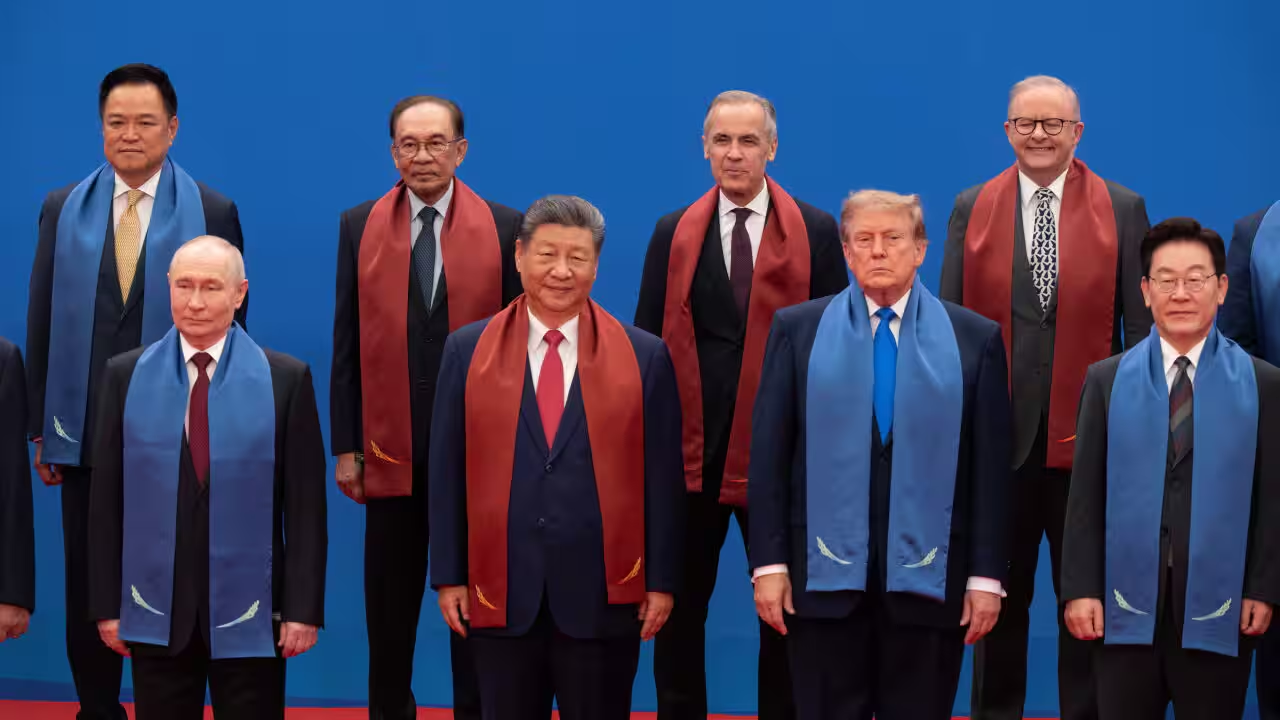
Before their historic meeting, US President Donald Trump, Chinese President Xi Jinping and Russian President Vladimir Putin took part in multiple group photos featuring all leaders present at the summit.
Your trusted source for staying up-to-date with the world around you. Get free daily news updates and analysis, straight to your inbox.
Albanese also appeared in the photos, and was criticised for sharing the stage with Putin, who has continued to wage war on Ukraine since Russia’s full-scale invasion in 2022.
“There is nothing normal, diplomatic or acceptable about standing shoulder to shoulder with Vladimir Putin, an indicted war criminal,” Australian Federation of Ukrainian Organisations chair Kateryna Argyrou said.
Albanese defended his decision, saying it would be disrespectful to the Chinese hosts if he boycotted the celebratory photograph and insisting he’d “make our position very clear when it comes to Ukraine”.
After months of hype about the summit, and speculation about who would pose with the Russian dictator, the opening moments landed with a thud.
An Australian stare-down to Russia
Putin had not attended an APEC meeting since 2017 as previous hosts are members of the International Criminal Court, which has a warrant for his arrest. However, China is not a signatory.
Albanese fulfilled his promise to make Australia’s position on the war in Ukraine clear during a speech to world leaders — including Trump and Xi.
The prime minister stared directly at Putin as he called for him to end the war, with the Russian president reportedly avoiding eye contact.
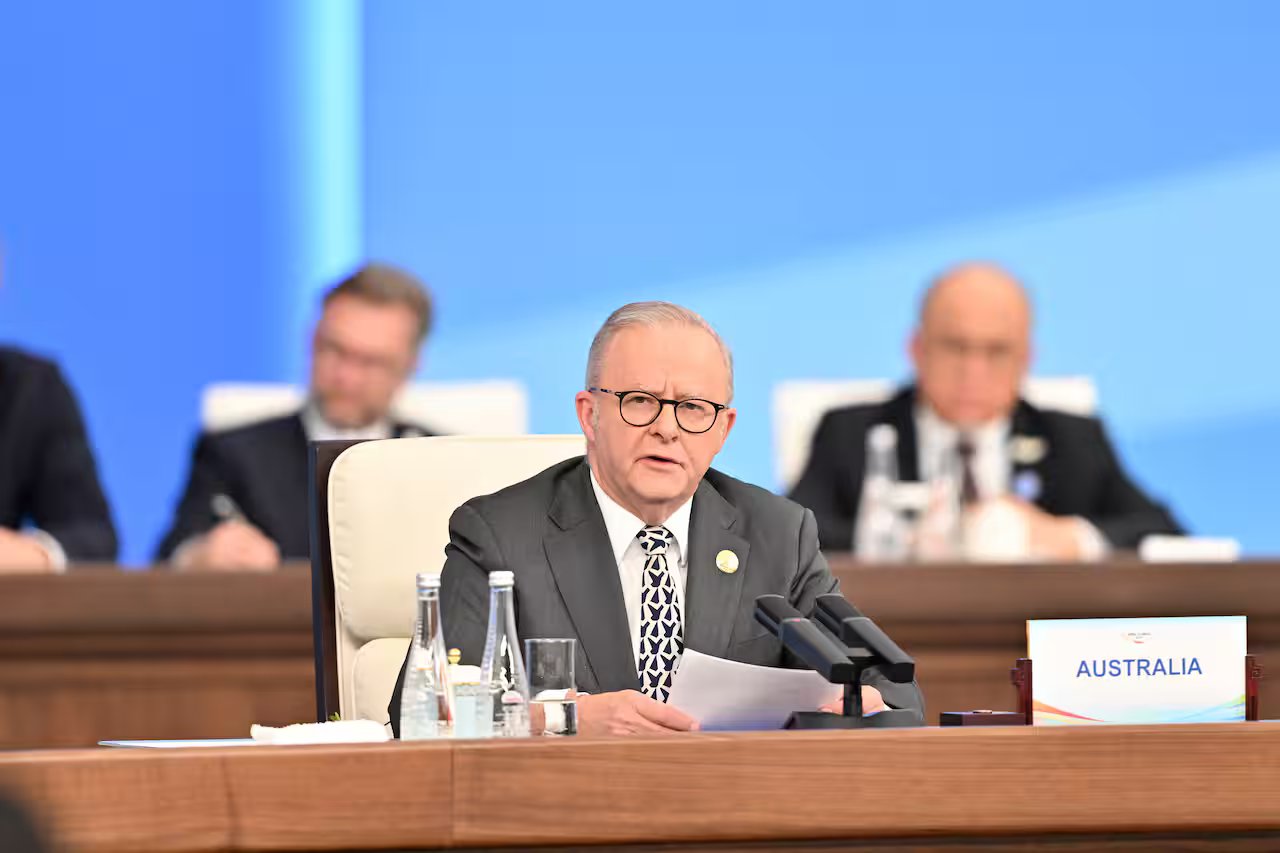
“Military conflict, disrupted global supply chains, and increasing challenges to the international rules that have underpinned decades of growth are impacting our national economies,” Albanese said. “Two of the biggest causes of disruption to trade are the conflicts in Ukraine and the Middle East, and we must do all we can to end them.
“And I say very directly to President Putin: end your war, end it now.”
Ukraine’s ambassador to Australia Vasyl Myroshnychenko said he “deeply” appreciated the prime minister’s leadership and support for Ukraine.
“Putin will only stop this war when the cost of continuing it becomes unbearable. I encourage the Australian government to further step up military assistance to Ukraine,” he said.
Unprecedented meeting between Russian dictator, Chinese leader and US President
Thursday’s trilateral meeting between Putin, Xi and Trump reportedly included an agreement that the International Criminal Court (ICC) and other similar bodies “must not abuse their jurisdiction”, with state officials immune from prosecution.
Trump opposes an ICC arrest warrant for former Israeli Prime Minister Benjamin Netanyahu, and Putin is wanted by the ICC for his alleged war crimes in Ukraine.
Trump said the meeting was “really making history” and told Xi and Putin they were shaking things up by ditching the “old school” way adversaries engage.
Xi said the talks with Trump and Putin were positive, and safeguarding world peace was a priority for all three, according to China’s Xinhua official news agency.
“As long as dialogue does not stop, doors remain open, there is hope for peace,” Xi was quoted as saying. “The seeds planted at today’s trilateral meeting will surely take root, sprout, blossom and bear fruit.”
Trump said wars in Iran and Ukraine were on the agenda, but there were no signs that any agreements from Xi or Putin were secured to help end the conflicts.
Putin said that the three nations, as founders of the United Nations, “bear responsibility for preserving and strengthening the system of international law”.
“Our nations share many common interests regarding the resolution of regional conflicts, including, of course, the conflict in Ukraine,” he said.
The Ukraine war was discussed in Putin’s separate bilateral meetings with Trump and Xi, but wasn’t the main topic of the three-way discussion, Putin’s spokesperson Dmitry Peskov said.
“I don’t think anyone even expected things to go so well,” Putin told Xi.
A “peace declaration” released after their meeting made no mention of Russia’s war in Ukraine or the US-led war in Iran, or the issue of Taiwan being re-unified with China, possibly by force.
It said they agreed to advance reforms to the UN, increase oil supplies across the countries and reduce nuclear risks.
Australia pushing free trade and AI regulation
Albanese told the APEC leaders gathered in Shenzhen that his government has abolished more than 1,000 tariffs since taking office less than five years ago.
Australia’s message focused on open markets, strengthening the World Trade Organization, reducing trade barriers and strengthening supply-chain resilience.
China accounts for more than a quarter of Australian exports, and Xi also promoted freer trade and economic integration across the region.
Albanese said that Australia’s trade with APEC economies is worth almost $1 trillion annually.
The prime minister also discussed the economic potential of AI along with the need for safeguards.
“Australia is proud to be developing national standards for AI that will ensure it works in our national interest, just as we have for social media,” Albanese said.
“We want to make sure that AI is developed and deployed safely. AI has been created by humans, it must be controlled by humans, and it must benefit humanity.”
For the latest from SBS News, download our app and subscribe to our newsletter.