Eisenkot allies move against Netanyahu’s legacy as new Israeli parliament opens
In brief
- Gadi Eisenkot’s bloc launched a push to unwind parts of Benjamin Netanyahu’s policies as Israel’s new parliament convened.
- Coalition talks remained deadlocked, with neither side holding enough seats to govern alone.
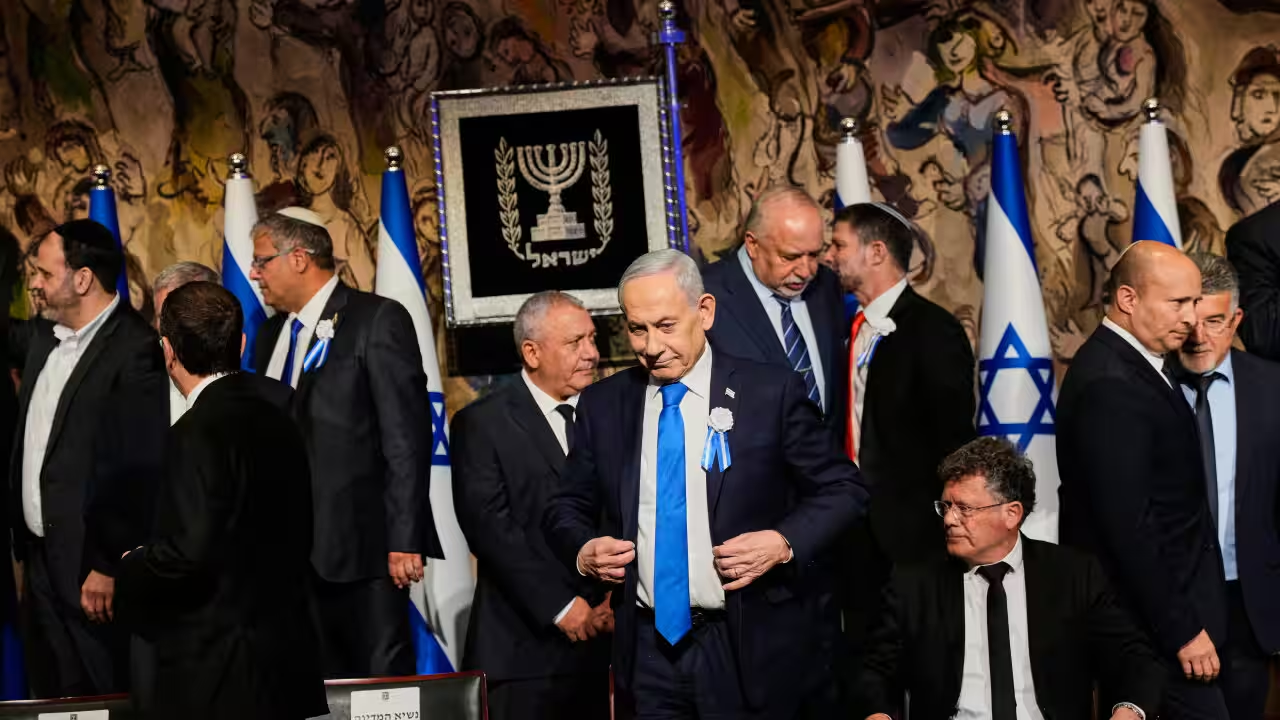
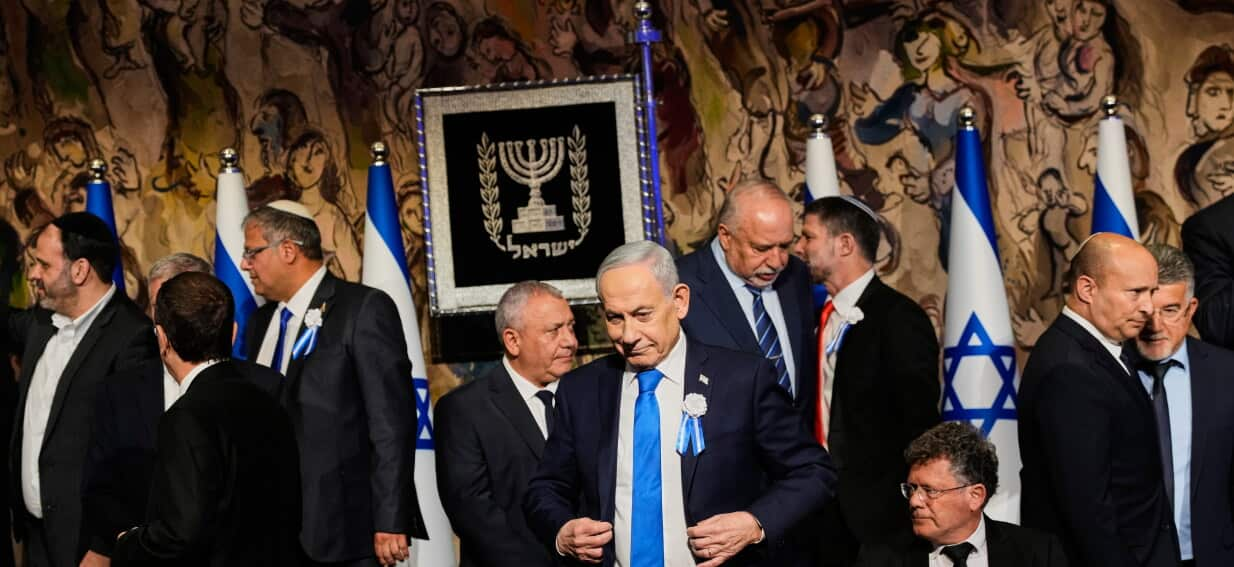
Israeli ex-army chief Gadi Eisenkot and his allies launched a legislative onslaught against caretaker Prime Minister Benjamin Netanyahu’s legacy on Wednesday, as a new parliament convened in a heated first session.
Though questions still linger over who can form a government, Eisenkot’s broad centrist bloc wasted no time in setting the Knesset’s agenda with a green light from Arab-Israeli politicians, whose role has stirred heated opposition from Netanyahu’s base and even right-wing supporters of Eisenkot.
Eisenkot’s Yashar party said it submitted a slew of proposals before the new parliament, including establishing an independent commission to investigate security failures that allowed the Hamas attack on 7 October 2023 — which Netanyahu has long opposed.
The party also moved for a sweeping repeal of a judicial overhaul implemented by Netanyahu’s government, which had triggered some of Israel’s largest-ever protests before being overshadowed by three years of war.
Setting the stage for legislative action, Eisenkot’s bloc announced it had enough votes in the 120-seat parliament to install a new speaker, Matan Kahana, also a former senior military figure.
Your trusted source for staying up-to-date with the world around you. Get free daily news updates and analysis, straight to your inbox.
The current speaker, Netanyahu ally Amir Ohana, said he had granted a request from 67 Knesset members to hold a vote for his successor next Tuesday, “despite my strong opposition to the intention of the emerging coalition”.
But neither Eisenkot nor Netanyahu — Israel’s longest-serving prime minister with nearly two decades in power — have the 61 votes needed to form a government.
Eisenkot, before his swearing-in, vowed “to form a national-emergency government as quickly as possible”.
Netanyahu, speaking after the inaugural session, made a new push for a national-unity government, saying Israel needed to confront a threat from Iran’s clerical government, which has survived two major Israeli bombing campaigns the premier ordered with support from United States President Donald Trump.
With his political survival on the line — and facing potential jail time if convicted on corruption charges after he is out of power — Netanyahu appeared to acknowledge a shifting diplomatic reality after US Democrats soundly defeated Trump in midterm elections last week on the back of anger over the war.
“In the very near future, we’re going to be confronted by international pressure to accept a nuclear-armed Iran and the preservation of this terror regime that seeks to annihilate us,” Netanyahu said.
Iran denies seeking nuclear weapons, and both Netanyahu and Trump have previously boasted that its nuclear program had been devastated.
Eisenkot dismissed the remarks as a “shameful” exploitation of the occasion, casting them as evidence that Netanyahu was “unfit to remain in office for even one more minute”.
He also cancelled a planned meeting with Netanyahu’s Likud party, with Yashar saying the premier “does not want unity” and accusing him of prioritising “his own political survival”.
Confrontations over Arab-Israelis
Israeli President Isaac Herzog, who has tasked Eisenkot with forming a government, opened Wednesday’s session by urging lawmakers to “do everything to avoid a repeat election”.
“Reach out a hand for compromise, even between rivals,” Herzog said.
But the tone in the new parliament was immediately tense, with shouting breaking out between lawmakers.
Eisenkot’s choice for speaker is expected to sail through thanks to support from Arab-Israeli parties, whose ranks grew to historic highs amid anger over Netanyahu’s far-right government.
But Avigdor Liberman, a right-wing member of Eisenkot’s bloc, has refused to serve in a government that relies on Arab-majority parties.
A number of Arab-Israeli parliamentarians — descendants of Palestinians who stayed after Israel’s creation in 1948 — left the opening session on Wednesday during the national anthem so as to avoid standing for it.
Liberman posted news of the walkout on social media, writing: “You want to form a government with them?”
Far-right caretaker national security minister Itamar Ben-Gvir loudly heckled Yousef Jabareen, leader of the Arab-majority Joint List, during the session.
“Who is he pledging allegiance to, Hamas?” Ben-Gvir, a Netanyahu ally, shouted before order was restored.
Mansour Abbas, leader of the Arab-Israeli party Raam, generally seen as more moderate, promised to work to replace the Netanyahu government, saying: “We aspire to be part of the solution.”
Plea for ultra-Orthodox
Shunning Arab-Israelis, Liberman has instead proposed an alliance with ultra-Orthodox Jews, despite his years of bitter denunciations of the community for its singular priority on maintaining an exemption from mandatory military service.
Eisenkot’s core bloc has 48 seats, but would achieve a majority if the 19 Arab-Israeli MPs either enter the government or, more likely, vote for it without joining.
The two ultra-Orthodox parties hold 13 seats. United Torah Judaism, which has seven, has stopped short of recommitting to Netanyahu, leaving him with 46 seats.
Netanyahu publicly pleaded with the ultra-Orthodox to stay with him.
“They’re going to promise you the moon and the stars but one minute after, God forbid, they form a government run by the left, all of those promises will vanish,” he said.
For the latest from SBS News, download our app and subscribe to our newsletter.